Also see "Trump’s plan intended to reduce high cost of childcare through tax breaks" at EdSource.
The Learning Curve
By Mario Koran
Voice of San Diego
December 8, 2016
Tax deductions and rebates are at the heart of President-elect Donald Trump’s child care policy proposal, writes EdSource, a plan that would offer the most help to high-income families, some help to middle-income taxpayers and not much help at all to low-income parents.
“The plan very much tilts towards high-income families who need the least help,” said Elaine Maag, senior research associate at the Tax Policy Center at the Urban Institute.
There’s widespread agreement among education experts that access to quality, early education programs can pay dividends for students in school later in life. There’s also widespread agreement among parents that costs can prohibit families from taking advantage.
In August, San Diego Unified announced – to much fanfare – that it was launching a “game changing” Preschool for All initiative. Despite its catchy title, however, that initiative amounted to letting parents pay up to $1,060 for a full day preschool spot. In other words, San Diego Unified’s initiative gave high-income parents an affordable preschool option, but did little for middle- and low-income parents who couldn’t afford what San Diego Unified is charging.
In that way, San Diego Unified’s Preschool for All initiative isn’t so different than Trump’s proposal.
Showing posts with label preschool. Show all posts
Showing posts with label preschool. Show all posts
Friday, December 09, 2016

Thursday, November 03, 2016
A new computer program that morphs faces reverses racial bias in children
 Researchers developed a facial photo-matching game
that reverses racial bias in children
Lila MacLellan
Flipboard.com
Nov 3, 2016
In a recent study from Yale University, preschool teachers were found to spend more time watching African-American children, and especially boys, for signs of misbehavior, than they did children of other races.
Sadly, this didn’t surprise anyone
who knew it to be true from experience.
"Yale study suggests racial
bias among preschool teachers" https://www.washingtonpost.com/news/education/wp/2016/09/27/yale-study-suggests-racial-bias-among-preschool-teachers/
…
More science to prove what black people already knew
More science to prove what black people already knew
These findings, which were published in Child Development, led the scientists to believe that the children were likely extending a negative perception about an unknown race to all people of that category. This is a symptom of the so-called “other-race effect,” which makes it challenging for a person to make distinctions between the individual faces of another race. (It’s at play when you hear someone make the cringe-inducing comment that people of one group “all look alike to me,” but it doesn’t always suggest underlying racism.)
Because learning to individuate faces has been shown to reduce race-based implicit bias in adults, the researchers decided to test the method with children...
Tuesday, December 22, 2015
The New Preschool Is Crushing Kids
What can parents and teachers do to fix the serious problems noted in the article below? Easy. Talk to kids!
"Conversation is gold. It’s the most efficient early-learning system we have. And it’s far more valuable than most of the reading-skills curricula we have been implementing: One meta-analysis of 13 early-childhood literacy programs “failed to find any evidence of effects on language or print-based outcomes.” Take a moment to digest that devastating conclusion."
The New Preschool Is Crushing Kids
Today’s young children are working more, but they’re learning less.
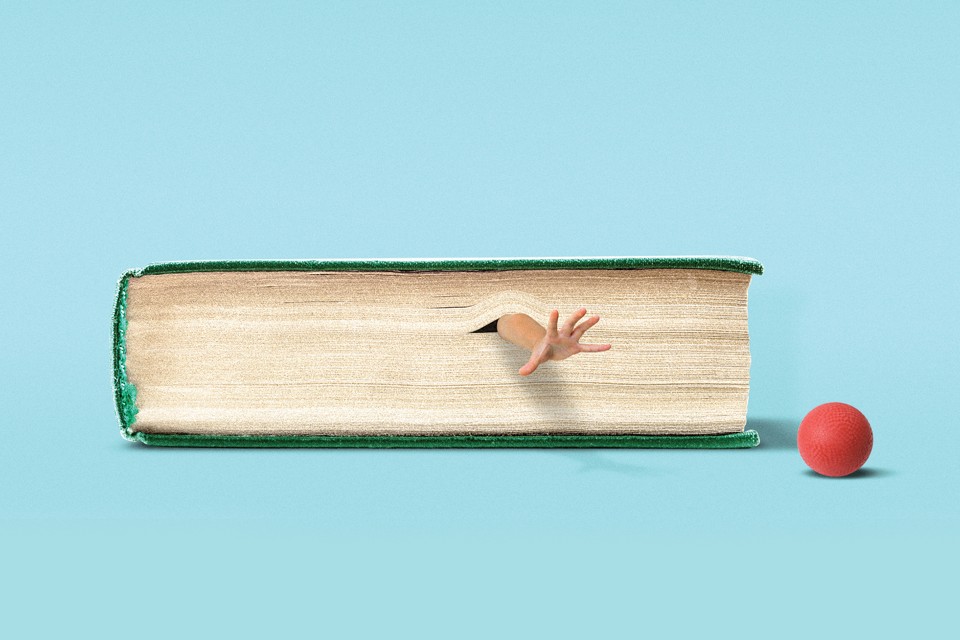
...The academic takeover of American early learning can be understood as a shift from what I would call an “ideas-based curriculum” to a “naming-and-labeling-based curriculum.”
Not coincidentally, the latter can be delivered without substantially improving our teaching force.
[Maura Larkins comment: It seems clear that most people have given up hope of improving the quality of our teachers. But it could easily be done--without firing any teachers. All you need to do is evaluate teachers effectively, and then assign each teacher to an appropriate job. The best teachers should be used in a completely different manner than they are today--rotating for short periods of time each day among several classrooms.]
Inexperienced or poorly supported teachers are directed to rely heavily on scripted lesson plans for a reason: We can point to a defined objective, and tell ourselves that at least kids are getting something this way...
...New research sounds a particularly disquieting note. A major evaluation of Tennessee’s publicly funded preschool system, published in September, found that although children who had attended preschool initially exhibited more “school readiness” skills when they entered kindergarten than did their non-preschool-attending peers, by the time they were in first grade their attitudes toward school were deteriorating. And by second grade they performed worse on tests measuring literacy, language, and math skills.
The researchers told New York magazine that overreliance on direct instruction and repetitive, poorly structured pedagogy were likely culprits; children who’d been subjected to the same insipid tasks year after year after year were understandably losing their enthusiasm for learning.
That’s right. The same educational policies that are pushing academic goals down to ever earlier levels seem to be contributing to—while at the same time obscuring—the fact that young children are gaining fewer skills, not more.
Because so few adults can remember the pertinent details of their own preschool or kindergarten years, it can be hard to appreciate just how much the early-education landscape has been transformed over the past two decades. The changes are not restricted to the confusing pastiche on classroom walls. Pedagogy and curricula have changed too, most recently in response to the Common Core State Standards Initiative’s kindergarten guidelines. Much greater portions of the day are now spent on what’s called “seat work” (a term that probably doesn’t need any exposition) and a form of tightly scripted teaching known as direct instruction, formerly used mainly in the older grades, in which a teacher carefully controls the content and pacing of what a child is supposed to learn.
One study, titled “Is Kindergarten the New First Grade?,” compared kindergarten teachers’ attitudes nationwide in 1998 and 2010 and found that the percentage of teachers expecting children to know how to read by the end of the year had risen from 30 to 80 percent. The researchers also reported more time spent with workbooks and worksheets, and less time devoted to music and art. Kindergarten is indeed the new first grade, the authors concluded glumly...
Thursday, March 27, 2014
Giving Up on 4-Year-Olds
Giving Up on 4-Year-Olds
By THE EDITORIAL BOARD
New York Times
MARCH 26, 2014
A new report released by the Department of Education’s Office for Civil Rights, examining the disciplinary practices of the country’s 97,000 public schools, shows that excessively punitive policies are being used at every level of the public school system — even against 4-year-olds in preschool. This should shame the nation and force it to re-evaluate the destructive measures that schools are using against their most vulnerable children.
Black students, for example, are suspended at three times the rate of white students. Minority children with disabilities fare worst of all; the race effect is amplified when disability comes into the picture. More than one in four minority boys with a disability — and nearly one in five minority girls — receive an out-of-school suspension. Students with disabilities make up 12 percent of the student population, but 25 percent of those are either arrested or have their disciplinary cases referred to the police.
This is distressing enough when it happens to adolescents. But the new data show that disparate treatment of minority children begins early — in preschool. For example, black children represent 18 percent of preschool enrollment but nearly half of all children who receive more than one out-of-school suspension.
The fact that minority children at age 4 are already being disproportionately suspended or expelled is an outrage. The pattern of exclusion suggests that schools are giving up on these children when they are barely out of diapers. It runs counter to the very mission of early education, which is to promote school readiness. It harms children emotionally at an age when they are incapable of absorbing lessons from this form of punishment. And it places those children at greater risk of falling behind, dropping out or becoming permanently involved with the juvenile justice system. Federal civil rights officials do not explain why minority preschool students are being disproportionately singled out for suspension. Regardless of the causes, there are ways to combat this crisis. Walter Gilliam of Yale University, who has studied the expulsion problem extensively, has suggested several ways to minimize it. Among other things, Mr. Gilliam has called for: limiting enrollment to 10 students per preschool teacher (preferably less) so that teachers have adequate time with the students; making sure that those teachers work reasonable hours; and giving them access to children’s mental health consultants who can assist them with the occasional difficult case. Young children with challenging behaviors should not be thrown out but should be assessed to see if a more therapeutic environment might better suit their needs. The goal should be to do everything possible to bring them into the mainstream.
The Obama administration has taken some steps to end practices that disproportionately and unjustifiably subject minority students to suspension, expulsion or even arrest for behavior that should be dealt with by the principal. It has ramped up civil rights investigations and forced some districts to modify their policies.
Earlier this year, it issued extensive guidance to school districts on how to recognize and avoid discriminatory practices, and it called for more training for teachers in classroom management. School districts need to re-examine how they discipline students, especially the youngest and most fragile in their care.
Tuesday, November 10, 2009
If we refuse to pay for good schools for poor kids, we end up without national defense
November 9, 2009
Too Few Youths Eligible for Military, Leaders Say
Report Recommends Investments in Early Childhood Programs
By Dakarai I. Aarons
The United States should invest in early education to help bolster the number of young people eventually eligible to serve in the military and protect national-security interests, a report released last week argues.
A majority of the nation’s young adults are ineligible for military service because they have not graduated from high school, have criminal records, or are physically unfit, says the report.
Based on research from a variety of sources, including the U.S. Department of Defense, the report says 75 percent of Americans ages 17 to 24—about 26 million people—are ineligible to join the military.
“A quality education is really an issue of national security,” U.S. Secretary of Education Arne Duncan said at a Nov. 5 news conference held to release the report. “If we don’t educate our children well, we put our nation at risk.” ...
Subscribe to:
Posts (Atom)