Showing posts with label California Teachers Association (CTA). Show all posts

Tuesday, May 05, 2015

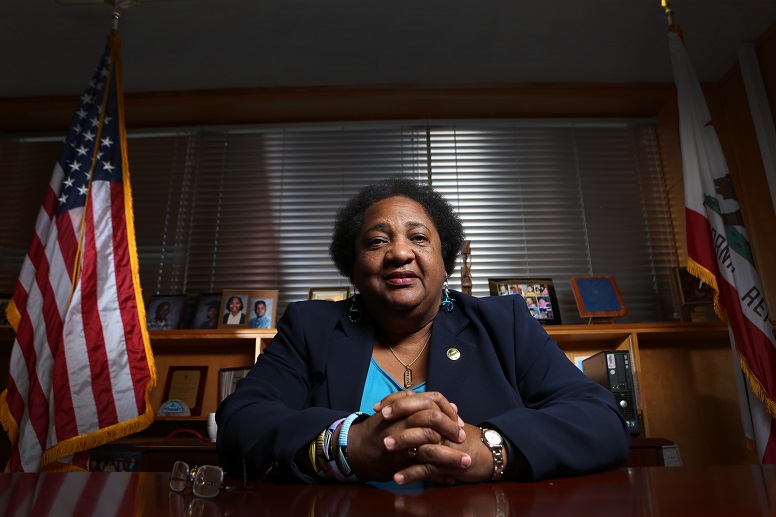
Sacramento Report: What the Hell Are We Doing? Assemblywoman Shirley Weber tries to help teachers improve


After I posted a comment on this page yesterday about the California Teachers Association's opposition to Assemblymember Shirley Weber's admirable efforts to improve teacher performance, I got a nasty, anonymous and untraceable phone call from a woman who sounded completely calm and sober.  She had a nice, ordinary voice, not the drug-addled, ignorant-sounding voice of most abusive phone callers.  I've been wondering who it could have been, and this morning I decided that it was very likely a teacher who was motivated by my comment in Voice of San Diego.

I considered changing my comment. I realized it was too harsh.  I should have done a better job qualifying my statement.

But I am not going to edit my comment in Voice of San Diego.

Instead, I'll qualify it in this response.

First of all, I want to acknowledge that ANYONE WHO RISES TO POWER IN ANY ORGANIZATION ON THIS PLANET is subject to a lot of pressure. I know for a fact that perfectly-decent people who become school administrators or school board members not-infrequently set aside their principles under pressure. They go along to get along, just like officials of CTA--and members of the California Assembly, both Democrats and Republicans.

Also, I think there's a big problem with the Vergara decision.  It puts the cart before the horse.  It gets rid of tenure WITHOUT HAVING A GOOD EVALUATION SYSTEM IN PLACE.  This is a very bad idea.  Vergara would increase the politics in schools instead of increasing the effectiveness of teacher evaluations. 

But isn't this exactly why CTA should agree to a plan like Shirley Weber's?


My conclusion is that CTA wants teacher evaluations to remain political. Why?  Because sometimes the worst teachers are the most loyal supporters of CTA officials and their pals.


Here's the comment I published yesterday in Voice of San Diego regarding the difficulties Democrats have in resisting the power of the California Teachers Association:
A few years ago at the California Teachers Association's yearly conference for the presidents of all the local affiliates, I heard then-executive director Carolyn Doggett tell teachers that they needed to take responsibility for good teaching or the responsibility would be taken from them.  [I was not a union official, just a lowly teacher.]  Clearly, CTA continues to refuse to take responsibility.  I'm afraid that the type of teacher that rises to power in CTA is not the type that's deeply interested in children.

Democrats should be ashamed of kowtowing to CTA instead of supporting principled reformers like Shirley Weber.

Below is an article from Voice of San Diego .--Maura Larkins


...During the Assembly Education Committee’s Wednesday hearing, the San Diego Democrat gave an inspired speech in support of her bill to require that student achievement be used as a factor in job evaluations of teachers and school administrators. Weber’s bill is one of several competing proposals for a comprehensive revision to the state’s teacher evaluation rules.

“Unlike the current way of doing things, AB 1495 would structure our evaluations around student achievement and help teachers improve their classroom outcomes,” Weber said.

Weber, who is considered one of the legislature’s most knowledgeable members on education issues, lined up support from several of the state’s leading education groups, including EdVoice, StudentsFirst and Students Matter. But her bill had one very powerful opponent: the California Teachers Association.

That opposition from the state’s teacher’s union was enough to kill the bill on a 3-2 vote — with fellow Democrats Kevin McCarty and Tony Thurmond opposed and Republicans Rocky Chavez and Young Kim backing Weber. (Other members abstained from voting, which meant the bill didn’t have enough votes in favor to move on.)

The hearing was shocking on several fronts. First, it’s rare for a member of the majority party to have one of their priority bills – on their expert subject matter – fail in committee. Even if members are opposed to the bill, they’ll commonly pass the bill out as a courtesy.

Second, Weber’s not a far-right ideologue that views the California Teachers Association as “the worst union in America.” Rather, she’s been featured frequently in the CTA’s magazine and received the California Federation of Teachers‘ endorsement for her re-election.

Finally, she’s chair of the Assembly Budget Committee, a position that gives her influence over every lawmaker’s pet project or legislative agenda.

The fight over AB 1495 reflects a growing divide among California Democrats over how to respond to Vergara v. California, the pending challenge to the state’s teacher tenure and dismissal process. On one side, those loyal to the state’s teacher’s union have refused to cede any ground, while others, such as Weber, view Vergara as “a wake-up call.”

“If we are not about improving the lives of children,” asked a frustrated Weber, “then what the hell are we doing? … What am I going to do after 40 years of working in a system I am frustrated by? Just go along to get along?”...

Friday, May 01, 2015

Sacramento Report: What the Hell Are We Doing? Assemblywoman Shirley Weber tries to help teachers improve


After I posted a comment on this page yesterday about the California Teachers Association's opposition to Assemblymember Shirley Weber's admirable efforts to improve teacher performance, I got a nasty, anonymous and untraceable phone call from a woman who sounded completely calm and sober.  She had a nice, ordinary voice, not the drug-addled, ignorant-sounding voice of most abusive phone callers.  I've been wondering who it could have been, and this morning I decided that it was very likely a teacher who was motivated by my comment in Voice of San Diego.

I considered changing my comment. I realized it was too harsh.  I should have done a better job qualifying my statement.

But I am not going to edit my comment in Voice of San Diego.

Instead, I'll qualify it in this response.

First of all, I want to acknowledge that ANYONE WHO RISES TO POWER IN ANY ORGANIZATION ON THIS PLANET is subject to a lot of pressure. I know for a fact that perfectly-decent people who become school administrators or school board members not-infrequently set aside their principles under pressure. They go along to get along, just like officials of CTA--and members of the California Assembly, both Democrats and Republicans.

Also, I think there's a big problem with the Vergara decision.  It puts the cart before the horse.  It gets rid of tenure WITHOUT HAVING A GOOD EVALUATION SYSTEM IN PLACE.  This is a very bad idea.  Vergara would increase the politics in schools instead of increasing the effectiveness of teacher evaluations. 

But isn't this exactly why CTA should agree to a plan like Shirley Weber's?


My conclusion is that CTA wants teacher evaluations to remain political. Why?  Because sometimes the worst teachers are the most loyal supporters of CTA officials and their pals.


Here's the comment I published yesterday in Voice of San Diego regarding the difficulties Democrats have in resisting the power of the California Teachers Association:


A few years ago at the California Teachers Association's yearly conference for the presidents of all the local affiliates, I heard then-executive director Carolyn Doggett tell teachers that they needed to take responsibility for good teaching or the responsibility would be taken from them.  [I was not a union official, just a lowly teacher.]  Clearly, CTA continues to refuse to take responsibility.  I'm afraid that the type of teacher that rises to power in CTA is not the type that's deeply interested in children.

Democrats should be ashamed of kowtowing to CTA instead of supporting principled reformers like Shirley Weber.

Below is an article from Voice of San Diego .--Maura Larkins


...During the Assembly Education Committee’s Wednesday hearing, the San Diego Democrat gave an inspired speech in support of her bill to require that student achievement be used as a factor in job evaluations of teachers and school administrators. Weber’s bill is one of several competing proposals for a comprehensive revision to the state’s teacher evaluation rules.

“Unlike the current way of doing things, AB 1495 would structure our evaluations around student achievement and help teachers improve their classroom outcomes,” Weber said.

Weber, who is considered one of the legislature’s most knowledgeable members on education issues, lined up support from several of the state’s leading education groups, including EdVoice, StudentsFirst and Students Matter. But her bill had one very powerful opponent: the California Teachers Association.

That opposition from the state’s teacher’s union was enough to kill the bill on a 3-2 vote — with fellow Democrats Kevin McCarty and Tony Thurmond opposed and Republicans Rocky Chavez and Young Kim backing Weber. (Other members abstained from voting, which meant the bill didn’t have enough votes in favor to move on.)

The hearing was shocking on several fronts. First, it’s rare for a member of the majority party to have one of their priority bills – on their expert subject matter – fail in committee. Even if members are opposed to the bill, they’ll commonly pass the bill out as a courtesy.

Second, Weber’s not a far-right ideologue that views the California Teachers Association as “the worst union in America.” Rather, she’s been featured frequently in the CTA’s magazine and received the California Federation of Teachers‘ endorsement for her re-election.

Finally, she’s chair of the Assembly Budget Committee, a position that gives her influence over every lawmaker’s pet project or legislative agenda.

The fight over AB 1495 reflects a growing divide among California Democrats over how to respond to Vergara v. California, the pending challenge to the state’s teacher tenure and dismissal process. On one side, those loyal to the state’s teacher’s union have refused to cede any ground, while others, such as Weber, view Vergara as “a wake-up call.”

“If we are not about improving the lives of children,” asked a frustrated Weber, “then what the hell are we doing? … What am I going to do after 40 years of working in a system I am frustrated by? Just go along to get along?”...

Friday, October 31, 2014

Shame on California Teachers Association (CTA) for opposing Prop 46; is CTA in the pocket of the Medical Association?

The California Medical Association has been wining and dining Democrats.  California Teachers Association seems very vulnerable to such attentions.  CTA has been campaigning to protect negligent doctors, keeping shamefully low caps on damages for extreme harm to patients.  Prop 46 is a positive step in the right direction for protecting patients in California.  Why is CTA opposing it?  CTA is playing politics and ignoring basic principles of fairness.

We test kids who play basketball.  We test pilots.  Why don't we test doctors?  Think of how many lives would be saved if more doctors were thinking clearly when they see patients, and if doctors had to pay a reasonable amount when they ruin lives.  See below Consumer Watchdog press release and LA Times article.


Doctors That Harm - The Real Stories Insurance Companies Against Prop 46 Don't Want You To Know: Dr. Carl Bergstrom
Lisa Cohen lisa@lisacohen.org

 CARMEL, CA: Dr. Bergstrom was arrested based on a report of sexual assault after a night of drinking.

During the trial, the prosecution produced an audiotape which Dr. Bergstrom had accidentally created when he left his office dictation machine on. Dr. Bergstrom was heard buying cocaine, using cocaine, and trading cocaine for sex on the 5.5 hours-long audiotape. Dr. Bergstrom admitted at trial that he traded prescription drugs for cocaine.

The audiotape also recorded Dr. Bergstrom issuing medical orders, dictating patient chart notes, and providing telephone consultations to patients after using, and while under the influence of, cocaine.
During the trial, two other women testified that they were similarly assaulted by Dr. Bergstrom. Both testified that they believed that they may have been drugged.

Dr. Bergstrom was ultimately sentenced to prison for felony sexual battery. As a result, Dr. Bergstrom's medical license was revoked.

Proposition 46, the Troy and Alana Pack Patient Safety Act, will enact the first law in the nation to require random drug and alcohol tests of physicians in hospitals, modeled after the Federal Aviation Administration testing program that has successfully reduced substance abuse by pilots. Doctors found to be impaired on the job will have their license suspended. If Prop 46 had been in effect, Dr. Bergstrom's drug abuse may have been detected, possibly preventing threats to patient safety in the process.

Hall of Shame: Insurance Companies Backing No on 46

NorCal Mutual Insurance Company    $11,000,000.00
The Doctors Company    $10,500,000.00
Cooperative of American Physicians    $10,161,489.04
Kaiser Foundation Health Plan    $5,000,000.00
Medical Insurance Exchange of California    $5,000,000.00
The Dentists Insurance Company    $1,620,000.00
The Mutual Risk Retention Group    $1,000,000.00

All Insurers:     $44,613,583.22

Total:     $59,169,984.79


Insurance companies have spent nearly $45 million dollars to oppose Prop 46 in order to shield dangerous doctors like Dr. Bergstrom from punishment, at the expense of patient safety, in order to protect their already substantial profits. In total, the opposition to Prop 46 has over $59 million dollars in their warchest, outspending consumer and patient safety advocates more than 8:1.

Learn more about Proposition 46 and the campaign for patient safety at: www.yeson46.org

Your Neighbors for Patient Safety, a Coalition of Consumer Attorneys and Patient Safety Advocates - Consumer Attorneys of California Issues
Initiative Defense Political Action Committees
Kabateck, Brown, Kellner, LLP


A voter guide to California's boring but important ballot propositions
George Skelton Los Angeles Times
Oct. 30, 2014

...Prop. 46 would return the limit on medical malpractice pain-and-suffering payouts to the same dollar value it was in 1975. Inflation has greatly eroded it.

Doctors, hospitals and insurers have raised more than $55 million to kill the measure. They claim it would cause healthcare costs to skyrocket. The nonpartisan Legislative Analyst's Office, however, calculates the increased cost as practically infinitesimal: less than 0.5%.

Back in 1975, then-Gov. Brown and the Legislature set the cap on noneconomic damage awards at $250,000. If that had been adjusted annually for inflation, it would be $1.1 million today. That's where Prop. 46 would reset it.

Opposition ads are demonizing trial lawyers, contending Prop. 46 is all about enriching them. But it's really about securing justice for malpractice victims, who now have difficulty hiring lawyers because the potential awards are so low.

The measure also does two other things. It would require drug and alcohol testing of hospital doctors. And to fight pain pill addiction, it would force doctors to use a state database that tracks patients' prescription histories.

It's long past time to bring the medical malpractice cap into the 21st century. And there's nothing wrong with requiring hospital doctors to undergo drug testing, as pilots and bus drivers do. Controlling pain pill addiction through modern technology also makes sense...

Tuesday, June 10, 2014

Tenure for teachers defeated in Vergara v. California; New mandate for CTA: start protecting good teachers

A California judge has found teacher tenure laws to be unconstitutional.

Let's hope that the California Teachers Association will now stop blocking efforts of reformers to effectively evaluate teachers.  Up until now, CTA has protected ineffective and mediocre teachers, but it looks like CTA is going to have to redirect its energies.

The current system of principal evaluations is a joke, but not a funny one. It is based more on politics than on observation and documentation. It has benefited teachers who are good at school politics even though they might be complete disasters in the classroom.  CTA has supported the current evaluation system because CTA is a master of school politics.

Oddly, we don't often hear demands from good teachers for an effective, objective evaluation system. It seems that good teachers are similar to bad teachers in one respect: they are equally loath to give up the very human institution of school politics. And of course, administrators also like the politics. They're not anxious to have impartial observers come in and evaluate teachers, either.

I am hoping that things will change now, at least for the teachers union. The only reasonable course of action for CTA to pursue now is to start protecting good teachers by helping to design an accurate, unbiased teacher evaluation system (since it looks like CTA will no longer be able to protect bad teachers).

we should institute effective evaluations before we get rid of tenure.  But I suspect that the decision handed down by a Los Angeles judge today (see story below) was probably neede I have said recently thatd
See also: Vergara v. California: the Case That Could Blow Up Teacher Tenure (But who cares? Without a good teacher evaluation system, it won't make much difference.)


to jump start reform.  CTA has made it pretty clear that it was not interested in allowing any real reform of any kind.
Calif. court rules teacher tenure creates unequal conditions
By Lyndsey Layton
Washington Post
June 10, 2014

LOS ANGELES (AP) — A judge struck down tenure and other job protections for California's public school teachers as unconstitutional Tuesday, saying such laws harm students — especially poor and minority ones — by saddling them with bad teachers who are almost impossible to fire.

In a landmark decision that could influence the gathering debate over tenure across the country, Los Angeles County Superior Court Judge Rolf Treu cited the historic case of Brown v. Board of Education in ruling that students have a fundamental right to equal education.

Siding with the nine students who brought the lawsuit, he ruled that California's laws on hiring and firing in schools have resulted in "a significant number of grossly ineffective teachers currently active in California classrooms."

He agreed, too, that a disproportionate number of these teachers are in schools that have mostly minority and low-income students.

The judge stayed the ruling pending appeals. The case involves 6 million students from kindergarten through 12th grade.

The California Attorney General's office said it is considering its legal options, while the California Teachers Association, the state's biggest teachers union with 325,000 members, vowed an appeal.

"Circumventing the legislative process to strip teachers of their professional rights hurts our students and our schools," the union said.

Teachers have long argued that tenure prevents administrators from firing teachers on a whim. They contend also that the system preserves academic freedom and helps attract talented teachers to a profession that doesn't pay well.

Other states have been paying close attention to how the case plays out in the nation's most populous state.

"It's powerful," said Theodore Boutrous Jr., the students' attorney. "It's a landmark decision that can change the face of education in California and nationally."
He added: "This is going to be a huge template for what's wrong with education."

In striking down several laws regarding tenure, seniority and other protections, the judge said the evidence at the trial showed the harm inflicted on students by incompetent teachers.

"The evidence is compelling," he said. "Indeed, it shocks the conscience."

The judge cited an expert's finding that a single year with a grossly ineffective teacher costs a classroom full of students $1.4 million in lifetime earnings.

The lawsuit contended that incompetent teachers are so heavily protected by tenure laws that they are almost impossible to fire. The plaintiffs also charged that schools in poor neighborhoods are used as dumping grounds for the bad teachers.

Los Angeles School Superintendent John Deasy testified that it can take over two years on average — and sometimes as long as 10 — to fire an incompetent tenured teacher. The cost of doing so, he said, can run from $250,000 to $450,000.

In his ruling, the judge, a Republican appointee to the bench, said the procedure under the law for firing teachers is "so complex, time-consuming and expensive as to make an effective, efficient yet fair dismissal of a grossly ineffective teacher illusory."

The judge also took issue with laws that say the last-hired teacher must be the first fired when layoffs occur — even if the new teacher is gifted and the veteran is inept.

The judge declined to tell the Legislature exactly how to change the system, but expressed confidence it will do so in a way that passes constitutional muster and provides "each child in this state with a basically equal opportunity to achieve a quality education."

The case was brought by a group of students who said they were stuck with teachers who let classrooms get out of control, came to school unprepared and in some cases told them they'd never make anything of themselves.

"Being a kid, sometimes it's easy to feel like your voice is not heard. Today, I am glad I did not stay quiet," said one of the students, Julia Macias. "I'm glad that with the support of my parents I was able to stand up for my right to a great education."

The lawsuit was backed by wealthy Silicon Valley entrepreneur David Welch's nonprofit group Students Matter, which assembled a high-profile legal team including Boutrous, who successfully fought to overturn California's gay-marriage ban.

Dennis Van Roekel, president of the National Education Association, the nation's biggest teachers union, bitterly criticized the lawsuit as "yet another attempt by millionaires and corporate special interests to undermine the teaching profession" and privatize public education.

U.S. Education Secretary Arne Duncan hailed the judge's ruling as a chance for schools everywhere to open a conversation on equal opportunity in education.

"The students who brought this lawsuit are, unfortunately, just nine out of millions of young people in America who are disadvantaged by laws, practices and systems that fail to identify and support our best teachers and match them with our neediest students," he said. "Today's court decision is a mandate to fix these problems."

The trial represented the latest battle in a nationwide movement to abolish or toughen the standards for granting teachers permanent employment protection and seniority-based preferences during layoffs.

Dozens of states have moved in recent years to get rid of such protections or raise the standards for obtaining them.

Comments on Voice of San Diego

Allen Hemphill

I have long believed that good teachers hate being part of a system where poor teachers are tolerated.

Maura Larkins

@Allen Hemphill And yet, oddly, we don't often hear demands from good teachers for an effective, objective evaluation system. The current system is based more on politics than on observation and documentation. It seems that good teachers are similar to bad teachers in one respect: they are equally loath to give up the very human institution of school politics. And of course, administrators also like the politics. They're not anxious to have impartial observers come in and evaluate teachers, either. I am hoping that things will change now, at least for the teachers union. Perhaps the Vergara decision will motivate CTA to start protecting good teachers since it looks like CTA will no longer be able to protect bad teachers.

Allen Hemphill

No chance. The union attitude is that bad teachers pay dues also.

Maura Larkins

I think the union may decide to rethink its intransigence on the issue of objective evaluations. The Vergara decision is a big deal.

The union is probably going to have to accept that the worst teachers should not longer play exactly the same role as the best teachers. Ineffective and mediocre teachers should have less responsibility and less pay.

Also, your average principal, who, in most cases used to be a mediocre teacher, should have less responsibility than the most effective teachers for making decisions about instruction. Principals have plenty of other responsibilities. Few of them are equipped to serve as true instructional leaders.

The Vergara decision will do very little good unless the current model of school leadership is changed. In my experience, the best principals were the ones who did the least harm. The bad ones can do enormous harm. I hope Vergara will not simply give more arbitrary power to principals. This situation cries out for objective teacher evaluations.

Thursday, May 08, 2014

Marshall Tuck is a better Democrat than Tom Torklason for this job: Tuck works well with the teachers union, and makes progress at the same time


Marshall Tuck (left) and Tom Torlakson

San Diego City Beat published the following endorsement for State Superintendent of Public Instruction. I disagree with editor David Rolland's conclusions, but he brings up some great discussion points.

Our June 3 primary-election endorsements
San Diego City Beat editorial
David Rolland, editor
May 07, 2014

...Marshall Tuck says he has the fix for California's ailing education system, and he has many people convinced.

Recently, former Los Angeles Mayor Antonio Villaraigosa endorsed him, touting the 40-year-old entrepreneur as a reformer. The two worked together on the Partnership for Los Angeles Schools, a nonprofit credited with improving education in low-income neighborhoods.

Tuck is also the past president of Green Dot Public Schools, one of the nation's most prominent charter-school networks.

Tuck hopes to unseat incumbent Tom Torlakson, a Democrat who has the support of the powerful California Teachers Association and the Democratic Party.

Increasingly, liberals support an education-reform agenda, but during his time in office, Torlakson has been lackluster, unwilling to stand up to union intransigence. Citizens now have to choose between a status-quo candidate and someone who could push for troubling changes.

[Maura Larkins' response: It's interesting that City Beat identifies Torlakson as a Democrat, but fails to let readers know that Tuck is also a Democrat. But at least City Beat editor David Rolland admits that Torlakson has failed to stand up to union intransigence or to change the status quo. Too many Democrats like to roll over and play dead as soon as the California Teachers Association steps into the arena. Democrats should care about kids as well as teachers. Teachers should be considered, but they shouldn't continue to have the final say on what goes on in our failing schools, especially since they refuse to agree to any plan for objective, effective teacher evaluations.]

Part of improving education, Tuck argues, is weakening labor protections for educators, such as seniority-based layoffs, making teachers wait longer than two years to get tenure and tying teacher evaluations to student test scores. Not everything Tuck proposes is bad, but as a former Wall Street investment banker with funding from groups that would love to see the privatization of public schools, it's unclear how far he would go to dismantle the current system.

While the superintendent's office interprets the education code, it has less power in terms of setting policy. So some feel Tuck could bring fresh perspective without being able to do too much damage.

However, Tuck is too dangerous of a choice for us. We reluctantly endorse Tom Torlakson for superintendent.

[Maura Larkins' response: Dangerous? Changing the status quo is dangerous? That makes no sense since the current system is consigning millions of students to a lifetime of failure (that's not dangerous?) and Tuck has admitted that the Superintendent doesn't even set policy.

Many people prefer the current system because it allows for arbitrary, political decision-making.

The teachers union does not want to address the problem of rampant mediocrity among teachers--or the smaller problem of the 10% of teachers who are ineffective.

CTA wants teacher evaluations and other decisions to continue to be determined by school politics rather than objective data provided by outside observers or standardized tests.

I don't believe students tests should be used to fire teachers, but I do believe the tests should be used to determine whether a teacher should either:
1) become a master teacher; or
2) be given a part-time master teacher to guide the weaker teacher and give supplemental lessons to students.

Many moguls (like Irwin Jacobs) and their administrator pals also want to avoid objective measurements and simply turn over all the power of teacher evaluations to principals. I notice these folks haven't come up with a way to evaluate principals, which is a problem since many principals are simply failed teachers.

Mr. Rolland seems as intransigent as the teachers union.

Sadly, Mr. Rolland is typical of San Diego liberals who march in lock step with the California Teacher Association leadership. Los Angeles liberals are more independent of CTA.

City Beat uses hysterical phrases like "dismantle the current system", then admits in his next breath that the state superintendent can't change policy. He clearly believes that the teachers union deserves protection more than kids do. I can see why he'd want to avoid an extreme anti-union candidate, but Tuck is a Democrat who has worked well with the California Teachers Association. Teachers at Green Dot schools created a model for teacher evaluations that will be used by the state:]


New Teachers' Union Contract Now In Effect at Green Dot Schools

07/12/2012

Teacher-Designed Evaluation Process and Professional Support to Serve as State Model

Los Angeles - Green Dot Public Schools announced a new contract agreement with their local teacher union, Asociación de Maestros Unidos (AMU), that provides a salary schedule step increase, a catch-up provision, and an innovative bonus program tied to teacher effectiveness. The contract, designed by teachers and ratified by vote of union members in May, officially went into effect July 1.

“In a time when the state has suffered severe cutbacks in education, we’re pleased our teachers will be better paid, better protected and better supported,” said Marco Petruzzi, Green Dot Public Schools’ President and CEO. “That is really a win for our students because it furthers our goal of having excellent instruction in every classroom.”

Under the new agreement, teachers will go through a more fair and comprehensive evaluation and development process, which will include multiple observations, ongoing feedback, and opportunities for professional growth. Test scores will be just one among multiple measures used for evaluation. Other key attributes of the agreement include a two-year pilot program for bonuses based on teacher effectiveness, and three additional professional development days for new teachers.

“We believe we’re on the right path to creating a more meaningful way of assessing teacher effectiveness,” added Dr. Cristina de Jesus, Green Dot’s Chief Academic Officer, speaking about the evaluation and development tools included the new contract. “Our goal is to become the leader in supporting teachers in their professional growth.”...

I disagree with Marshal Tuck about Vergara v. California. I think getting rid of tenure and seniority would be a disaster without instituting effective teacher evaluations. But something has to be done to release the death grip of CTA that prevents any meaningful reform at all. I also think something needs to be done to release the death grip of administrators.

What exactly will it take for California Teachers Association to agree to reforms, including effective teachers evaluations?

I don't like the Parent Trigger law, since parents don't seem to be able to improve schools when they take them over, but at least it gets the attention of officials in failing schools.

A Great Divide: The Election Fight for California’s Schools By Gary Cohn California Expose March 12, 2014 ...“There’s no question that the teachers union has a lot of influence on the state, but I think they get too much negative credit for all the problems,” Tuck tells Capital & Main during a lengthy interview at his bare-bones campaign office on Venice Boulevard in Los Angeles. Then, almost in mid-sentence, he appears to change his mind about teachers unions. “Right now,” he continues, “their seat at the table is too big and they have too much influence over education policy.”

Tuck has spent almost no time as a classroom instructor, while the 64-year-old Torlakson is a veteran science teacher and track coach. Torlakson, who is still a teacher on leave from Contra Costa County’s Mount Diablo Unified School District, says he usually teaches one community college course every year. He was elected as California’s 27th State Superintendent of Public Instruction in 2010 after serving in the state legislature. The two men also face longshot candidate Lydia Gutierrez, who lost a bid for superintendent in the 2010 primary. If no candidate receives more than 50 percent of the June primary vote, a runoff election between the two frontrunners will take place in November.

Torlakson has received substantial financial support from unions and celebrates his closeness with teachers. “I’m happy to be aligned with teachers – classroom teachers know me and trust me,” he says in a telephone interview.

A significant indication of what a future Tuck administration’s relations with teachers might look like can be found in his embrace of a lawsuit that seeks to erase nearly a century of teacher job protections, including seniority rights. The lawsuit, Vergara v. California, is currently being tried in Los Angeles Superior Court and names Torlakson as a defendant.

“I’m supportive of the case,” Tuck says. “I think that the changes they’re asking for are good for kids and make sense for California schools.” He points out that he recently wrote a commentary for LA School Report backing the case. Tuck also believes in the contentious Parent Trigger law, which has opened the door for charter schools to take over public schools and is strongly supported by conservatives and school privatizers. Torlakson voted against the law in 2009 when he was a member of the state Assembly.

Surprisingly, even those who follow the politics of education have paid little attention to the Tuck-Torlakson battle, which has received scant media coverage so far. John Rogers, director of the University of California, Los Angeles’ Institute for Democracy, Education and Access, suggests that influence over education policy has shifted somewhat from the superintendent to the California State Board of Education. The board’s current president is Michael Kirst, who was appointed by Governor Jerry Brown. Kirst had served on the state board of education under Brown in his first term as governor in 1975...


Here's a bizarre endorsement from San Diego's La Prensa:

State Superintendent of Public Instruction

This year the State Superintendent of Public Instruction is a very competitive race between the incumbent Torlakson and Marshall Tuck...

The last thing the schools need today are more changes...

We believe that now is not the time for change, but a time for a steady hand on the wheel to help guide education and Torlakson is that person.

[Maura Larkins' comment: I wouldn't call it "guiding" if the guide is guaranteed not to change course. You don't even need a human being at the wheel if you don't want any changes. You just jury rig the steering wheel so it can't move.]

Monday, January 13, 2014

My Happy Hacker takes orders from lawyers, but also seems to have a sense of humor


I'm awarding good humor points to my hacker, who has become quite playful during the past week. He (or she) is having fun, but doing no harm.

Less than a week ago I discovered that this page in my related website had been hacked.

HERE IS THE HACKED IMAGE OF A GRIEVANCE I SUBMITTED TO CVESD:


I published this blog post, which the hacker must have read. In the post I wrote that California Teachers Association (CTA) director Jim Groth, who had been Chula Vista Educators (CVE) grievance chair at the time, had turned up unexpectedly at the grievance meeting and said that the union did NOT support the grievance. The grievance merely asked that the district RESPOND to an earlier grievance. It appears that CTA was quite desperate to cover up illegal actions of pals of CVE President Gina Boyd.


Former CVE President Gina Boyd at her deposition.
This blogger has awarded to Gina the Alberto Gonzalez
CRS award for her amazing lack of knowledge and
substantial memory loss: "I don't know"--25 times and
"I don't remember (or recall, etc.)--35 times;
total cognition lapses: 60.


Sometime during the past few days, someone went to work on my grievance image again. But this time, my hacker did NOT hide any information. He (or she) just moved black boxes around! It's actually quite entertaining to examine his (or her) handiwork.

He (or she) enlarged the black box to cover EMPTY SPACE on this page:


and moved the black box sideways on this page!


I actually like my hacker now, but I'm still not terribly fond of the lawyers who ordered the hacking.


It should be noted that CTA isn't the only party trying to hide these events. Current CVESD board members Pam Smith and her faithful allyLarry Cunningham were involved in the criminal actions, and they also have paid tax dollars to lawyers to support efforts to shut down my website.

Monday, September 30, 2013

Judge revokes state oversight of 6 Aspire charter schools

Judge revokes state oversight of 6 Aspire charter schools
July 9, 2012
Corey G. Johnson
California Watch

A superior court judge has invalidated the State Board of Education's oversight of one of the state's biggest charter school companies, giving six schools until June 2013 to gain approval from local school districts or be forced to close.

Alameda County Superior Court Judge Jo-Lynne Lee found that the board improperly awarded Aspire Public Schools rights to bypass local district oversight and open schools anywhere in California, without evaluating whether the company met the state's requirements.

Lee's ruling represents a victory for the California Teachers Association, California School Boards Association and Association of California School Administrators, which sued the education board in 2007.v State law says charters can be allowed to open schools anywhere in California if they can prove their services are a "statewide benefit" that cannot be provided by a charter school overseen by a local district. But in their lawsuit, the school groups claimed the state education board awarded Aspire operating rights without assessing whether a benefit existed.

In 2010, an appeals court agreed and sent the case back to Alameda County for a final ruling. Lee published her 29-page order [PDF] last month. The state education board also must revamp its rules on state charters, according to the ruling.

Based in Oakland, Aspire is one of the most prominent charter school management organizations in the nation and serves nearly 12,000 students at 34 schools in California.

Six Aspire campuses with about 1,900 students were overseen by the state education board and now will have to reapply to local school officials. They are Aspire Alexander Twilight College Preparatory Academy and Aspire Alexander Twilight Secondary Academy in Sacramento, Aspire APEX Academy and Aspire Port City Academy in Stockton, and Aspire Junior Collegiate Academy and Aspire Titan Academy in Huntington Park.

Under the ruling, the schools have until June 24, 2013, to gain reapproval or close.

Aspire CEO James Willcox said he is confident Aspire's applications will be approved by local school boards. Meanwhile, Willcox said the organization might decide to appeal the judge's decision.

"We are committed to serving all of our students and families who count on Aspire and want to calm any uncertainty that this decision may cause," Willcox said. "As we discussed on our recent conference call, we have applied for charters or renewals nearly 60 times since our founding, with positive results in all cases. We are hopeful that the three school districts involved will recognize the success we have had for students from their communities."

In a statement, Karen Stapf-Walters, interim executive director of the school administrators association, said the organization was satisfied with the court's decision.

“We’re pleased by the judge’s decision to ensure the State Board adopts the required procedural rules so only those charters that truly meet the test of statewide benefit status are considered in the future,” Stapf-Walters said. "It is important that all public schools and students are treated equitably.”

The court ruling also has implications on Wall Street. Last month, Fitch Ratings downgraded and placed Aspire's bonds on "negative outlook" status, concluding that the organization hadn't fully shared the implications of the lawsuit with investors. Under statewide operating status, Aspire was able to successfully acquire $93.3 million in bond sales.

The assessment from the rating agency could scare off potential Aspire bond investors and result in higher interest rates for the company.

The organization is making strides nevertheless – outside of California. Six states have recruited Aspire to turn around underperforming schools, Willcox told Education Week recently. The Tennessee Achievement School District, a state entity, hired Aspire last month to take over schools in Memphis.

Court of Appeal, First District, California.

CALIFORNIA SCHOOL BOARDS ASSOCIATION v. STATE BOARD OF EDUCATION

CALIFORNIA SCHOOL BOARDS ASSOCIATION et al., Petitioners and Appellants, v. STATE BOARD OF EDUCATION, Respondent; Aspire Public Schools, Inc., Real Party in Interest and Respondent.

No. A122485.

-- July 26, 2010

Deborah B. Caplan, N. Eugene Hill, Richard C. Miadich, Olson, Hagel & Fishburn, LLP, for Appellants, California School Boards Association, Association of California School Administrators, Stockton Unified School District.

Joseph R. Colton, Priscilla Winslow, California Teachers' Association, for Appellants, California Teachers' Association.

Edmund G. Brown, Jr., California Attorney General, Susan M. Carson, Supervising Deputy Attorney General, Benjamin J. Riley, Deputy Attorney General, for Respondents, California State Board of Education.

Paul C. Minney, Andrew G. Minney, Middleton, Young & Minney, LLP, for Respondents, Aspire Public Schools, Inc.

Tuesday, February 19, 2013

Just as I suspected: Emma Leheny is back as CTA chief counsel!

CAROLYN DOGGETT AND PRISCILLA WINSLOW OUT, EMMA LEHENY IN

CTA head counsel Emma Leheny

The California Teachers Association's website has (once again) been changed to say, "The Legal Services Division is directed by Chief Counsel Emma Leheny."

Emma Leheny recently stepped away from the helm of CTA's Legal Services, apparently during some kind of a power play by Priscilla Winslow (perhaps with the assistance of former head counsel Beverly Tucker and her supporter, executive director Carolyn Doggett?)

It looks like Governor Jerry Brown stepped in to help. He appointed Priscilla Winslow to PERB, the Public Employee Relations Board. Now that Winslow has gone to PERB, Emma Leheny has resumed her position.

Why do I think Executive Director Carolyn Doggett may have supported Priscilla Winslow?

First, the two have worked together as Executive Director and Associate Director of CTA for the past couple of years.

Second, Doggett has a very long history of supporting her cronies, such as former chief counsel Beverly Tucker, even when they were engaged in illegal actions. Doggett, Tucker and Winslow are the power trio of the old guard. I'm sure Beverly Tucker's political connections are still strong. Emma Leheny obviously had trouble with the old guard, even though she has worked with them on several cases over the years, before coming to work for CTA. (I don't consider people like Dean Vogel, the president, to have much power at all, so I don't blame Vogel for the tumult. Besides, he's a nice guy.)

Third, Carolyn Doggett is finally going to release her grip on the Executive Director position at CTA. She's retiring in June 2013. I suspect she wanted to leave her cronies in charge.

Fourth, Emma Leheny and the old guard were bound to come into conflict simply because Emma has spent her entire legal career in the real world, not in the cocoon of CTA, where all the favored cronies are protected from consequences of wrongdoing by the enormous power of CTA. In fact, at CTA ethics is defined as not blowing the whistle, no matter what happens. More than one official has told me it would be unethical to report wrongdoing, including crimes. Emma is more aware of the threats presented by the real world to lazy, overconfident union lawyers. Carolyn Doggett

Carolyn Doggett announces retirement
California Educator
Volume 17 Issue 4
December 2012

CTA Executive Director Carolyn Doggett announced she will retire in June 2013, closing a 45-year career in public education...

Monday, February 18, 2013

Attorney Priscilla Winslow of CTA appointed to California PERB board

Update Feb. 19, 2013:Emma Leheny is back as head counsel at CTA!

In a surprising twist, it seems that soon after replacing Emma Leheny as the top person in the legal division of CTA (California Teachers Association), Priscilla Winslow is herself leaving CTA to become a member of the Public Employee Relations Board. Unless, that is, PERB is going to give up all pretense of being independent of CTA, and is planning to have a CTA lawyer actually make decisions for PERB.

There is actually no evidence that Emma Leheny left CTA, only that she left the position of head counsel.

Eric Banks has also been appointed to the PERB board.

GOVERNOR BROWN ANNOUNCES APPOINTMENTS
2-1-2013
CA.gov

SACRAMENTO – Governor Edmund G. Brown Jr. today announced the following appointments.

...Priscilla Winslow, 60, of Berkeley, has been appointed to the California Public Employment Relations Board, where she has served as legal advisor since 2012.

She was assistant chief counsel at the California Teachers Association from 1996 to 2012. Winslow was managing partner at the Law Offices of Winslow and Fassler from 1988 to 1996 and was solo practitioner at the Law Offices of Priscilla Winslow from 1986 to 1988. She was an adjunct professor at New College of California from 1984 to 1993 and was associate attorney at Boltuch and Siegel from 1984 to 1986.

Winslow served as a temporary staff attorney at the California Teachers Association from 1983 to 1984 and was legal advisor to the chair of the California Public Employment Relations Board from 1979 to 1983. She was staff counsel for the National Treasury Employees Union from 1978 to 1979 and chief counsel for the Clerical and Allied Services Employees Union from 1977 to 1978. Winslow is a member of the American Constitution Society and the Labor and Employment Law Section of the State Bar.

She earned a Juris Doctorate degree from the University of California, Davis School of Law. This position requires Senate confirmation and the compensation is $128,109. Winslow is a Democrat.

...Eric Banks, 41, of San Diego, has been appointed to the California Public Employment Relations Board. Banks has been partner at TenPageMemo LLC since 2013. He served in multiple positions at the Service Employees International Union, Local 221 from 2001 to 2013, including advisor, president and director of government and community relations. Banks was policy associate for state government affairs at the New York AIDS Coalition from 2000 to 2001. He worked in multiple positions at the Southern Tier AIDS Program from 1993 to 2000, including director of client services, assistant director of client services and case manager. This position requires Senate confirmation and the compensation is $128,109. Banks is a Democrat...

Ten Page Memo, LLC

Eric Banks is strategic advisor to the president of the Service Employees International Union, Local 221, representing public employees in San Diego and Imperial Counties. Before being elected as president Eric served as the Local 221's director of government and community relations. Born into a family of trade unionists, he has a deep passion for the rights of working men and women.

Eric moved to San Diego in 2001 from Albany, NY, where he worked as the policy associate for the New York AIDS Coalition (NYAC). Based in the State Capitol of New York, he was responsible for representing more than 250 AIDS organizations across the State. Eric spent over a decade working at the Southern Tier AIDS Program (STAP), directing case management, treatment education and housing services for people living with HIV/AIDS across eight counties in Upstate New York.

Saturday, February 02, 2013

Emma Leheny leaves her job as head counsel at CTA; Priscilla Winslow steps in again as temp chief counsel

UPDATE FEB. 19, 2013: Emma Leheny is back as CTA chief counsel!

UPDATE FEB. 18, 2013: Priscilla Winslow appointed to PERB board.

ORIGINAL STORY:

Former (and future?) CTA head counsel Emma Leheny

There's been an upheaval in the legal department at California Teachers Association. Chief Counsel Emma Leheny has stepped aside from her position at the top of the CTA hierarchy. It appears that attorney Priscilla Winslow has challenged Leheny's power. Winslow is acting chief counsel.

CTA did not explain these goings on. It posted only the following on its website:

"The Legal Services Division is directed by Associate Executive Director and Acting Chief Counsel Priscilla Winslow."

This isn't Priscilla Winslow's first time as acting chief counsel. She also took over the CTA legal department temporarily when previous head counsel Beverly Tucker retired in 2008. Then Winslow went back to being Assistant Chief Counsel before becoming Assistant Executive Director.

It seems that Priscilla might be somewhat hard to get along with. Emma Leheny's predecessor, Ann O'Brien, served for a very short time.

On behalf of CTA, Winslow represented child molester Charles Bateman, helping him keep his credential for six years. CTA spent far more on Bateman than it was obliged by its member contract to spend.

Apparently, PERB was impressed with Winslow's practice of law. It's 2012 annual report states that on July 23, 2012, Priscilla Winslow was appointed Legal Advisor to Mr. Hugeunin. At the same time, she was Associate Executive Director of CTA as well as Assistant Chief Counsel of CTA.

Why did Emma Leheny leave her position so soon, after less than three years? Is she really gone, or did she just step aside from her leadership role, while remaining at CTA? Why isn't anyone saying anything about why Leheny left?

In fact, Leheny is still listed by the State Bar Association as working for CTA:

Emma Leheny - #196167
The following information is from the official records of The State Bar of California.
California Teachers Association
1705 Murchison DrBurlingame, CA 94010
Phone Number: (650) 552-5413
Fax Number: (650) 552-5019
e-mail: eleheny@cta.org
County: San Mateo
Undergraduate School:Brown Univ; Providence RI
Sections: Labor; Employment
Law School: Northeastern Univ SOL; Boston MA
6/29/1998 Admitted to The State Bar of California

Perhaps the Bar Association is right, and Leheny is still at CTA, just not in the chief counsel position.

Sunday, January 27, 2013

California Teachers Association protects child molesting teacher

The California Teachers Association, and in particular, current Associate Director and Acting Chief Counsel Priscilla Winslow, went beyond the call of duty to defend a child molesting teacher in the Moraga School District. CTA members have a contract that only requires CTA to pay about $20,000 in legal fees when a district wants to fire a teacher. But in this case, one of the head lawyers for the union, Priscilla Winslow, kept on working for the teacher long after she'd done $20,000 worth of work. Perhaps the head office worked on the case so there wouldn't be any large, embarrassing legal bills to show how hard CTA works to protect child molesters.

Priscilla Winslow is acting chief counsel of CTA for the second time. Winslow held that position after Beverly Tucker retired, and again recently when Emma Leheny unexpectedly left that position after less than three years on the job. Perhaps Winslow contributed to her decision to leave?

CTA is shockingly predictable in its protection of child molesters. See the Albert Truitt case and Fred Kamper case. In the Fred Kamper case, the teachers union even helped get Kamper elected to the school board, but parent demonstrations caused him to resign.

Also, see my recent story, "Were CVESD and Chula Vista Educators negligent in Kinloch child molestation case?" I suspect we'll be hearing a lot more about the John Raymond Kinloch case in the coming years.


Moraga teacher kept job for two years after allegations of inappropriate touching of third-graders
By Matthias Gafni
Contra Costa Times
01/26/2013

The Moraga School District learned firsthand how difficult firing a tenured teacher can be.

It took 17 months to fire former third-grade teacher Charles Bateman even though an administrative panel ruled he should be terminated for "immoral conduct" and "evident unfitness for service" after it found he touched six girls under their clothing in his classroom in 1993. It took six years before he lost his teaching credential.

Two decades later, the statutory due process laws in California remain largely unchanged.

Bateman was a teacher for 23 years, his final seven at Rheem Elementary School in Moraga. The once popular teacher, now 69 and living in Brentwood, according to public records, taught third grade in the 1992-93 school year.

On Feb. 23, 1993, two parents of girls in his class came forward to Principal Paul Ricciardi after reading of the abuse in a victim's diary. In the end, six girls came forward with most claiming Bateman reached under their shirts to rub their back, stomach and chest areas, and sometimes under the girl's pants waistbands, according to court documents.

Ricciardi appropriately performed his legal "mandated reporting" duties that day and contacted Child Protective Services and Moraga police and Bateman was immediately placed on administrative leave.

The school board voted the next month to fire him, but Bateman appealed. In September 1993, all six girls testified at a hearing at Joaquin Moraga Intermediate School before a three-person Commission on Professional Competence panel. Bateman was paid his full salary during the investigation and the California Teachers Association paid his legal bills.

Bateman's defense during the administrative hearings was that he was an affectionate hugger and that any inappropriate touching was unintentional.

Testimony during the hearing also brought out more troubling realizations about retired school administrator Bill Walters, who served as principal of Joaquin Moraga middle school when Bateman taught there. Walters was also entangled in the district's 1990s child sex abuse scandal when he failed to perform his legal mandated reporting duties after learning of another teacher accused of abusing students. This failing, critics say, helped lead to further abuse.

In a 1986 teacher evaluation by Walters, he writes about Bateman: "It is imperative that Chuck use extreme caution with his physical interactions with students so as not to be misinterpreted by the community and the district."

The review referenced a letter sent to Walters from a parent that stated Bateman "engaged in more physical interaction with the girls in his classes than he did with the boys," according to documents released after a public records act request by this newspaper.

Rheem Principal Ricciardi also "cautioned" Bateman on occasions before 1993 "that he should be careful to avoid physical interaction with students, which could be interpreted as being inappropriate," according to commission records.

The administrative appeal ended with the commission voting unanimously to terminate Bateman; however, he petitioned Contra Costa Superior Court to overturn the decision. Bateman's attorney was Priscilla Winslow, who now is acting chief counsel for the California Teachers Association, running the union's legal services division. She did not return a call for comment, nor did Bateman.

Bateman lost his appeal, but he continued to fight the state to keep his credential. It's unclear if he ever taught at another district during his fight while his credential was still valid.

Bateman was never charged with a crime.

Contact Matthias Gafni at 925-952-5026. Follow him at Twitter.com/mgafni.

Journey to fire teacher

Feb. 23, 1993: Moraga principal calls police after six girls in Charles Bateman's third-grade class claim the popular teacher touched them under their clothes. He is immediately placed on administrative leave.
March 23, 1993: The school board votes to fire Bateman.
April 16, 1993: Bateman appeals the firing.
September 1993: The girls testify at a hearing at Joaquin Moraga Intermediate School before a three-person Commission on Professional Competence panel.
Oct. 26, 1993: The commission votes unanimously to terminate Bateman.
Jan. 12, 1994: Bateman petitions Contra Costa Superior Court to have the decision overturned.
July 29, 1994: Contra Costa Superior Court Judge James Marchiano denies Bateman's request to overturn his firing. He is officially terminated.
Feb. 16, 1995: The parents of the girls are alerted that the state is moving to revoke Bateman's credential.
April 5, 1996: Bateman fights for his credential; parents of children asked if girls could again testify.
March 25, 1999: Bateman's credential is revoked.

Thursday, October 18, 2012

Lisa Berlanga is wrong about what is needed to turn around schools

UPforED will not make anything better as long as it thinks that teachers are the only interest group that is sabotaging education.

The entrenched and corrupted power of school district politicians and administrators is just as big a problem as the teachers' union. For BOTH groups, kids come second to personal agendas. In order to keep power in the hands of powerful administrators, board members and their union official secret pals, school districts and the teachers union cooperate behind closed doors a lot more than most people know.

It's just too tempting for the leaders of both groups to maintain the status quo.

I agree with Lisa Berlanga that the California Teachers Union has stood in the way of meaningful teachers evaluations--but administrators and politicians are equally guilty. Lisa's organization seems to want to let the wolf replace the fox in the henhouse.

UPforED could actually do some good if it got an effective system of teacher evaluation instituted. The evaluation system would not need to put much, if any, emphasis on student test scores. But it's about time we had eyes in the classrooms, simply recording what teachers are doing.

Principals are not doing, and probably can not do, a proper job of evaluating their own teachers. They have to play politics with powerful teachers to make their schools function. Evaluations should be done by people from outside a school, or, better yet, from outside a school district. Perhaps even volunteer parents could do some of the basic information gathering on teacher performance.

Why not work for meaningful teacher evaluations, Lisa?

Is it just too easy to target the teachers union?

School Board Election Key to Turning Around San Diego Schools
Oct 18, 2012
By LISA BERLANGA
Voice of San Diego

On Nov. 7, San Diego Unified School District moves forward with three new or re-elected board members reconfiguring a board of five, beleaguered by governing questionably in the students' best interests.

In the last few years, we've seen more than our share of controversies that United Parents for Education, or UPforEd, believes served the political expediency of adults to the personal disappointment of parents, and the educational letdown of students. Let's consider just a few decisions made by five people, elected by the majority of San Diego Unified voters that leads us to question their motives.

Recently, San Diego Unified decided not to pursue $15 million dollars in funds under Race to the Top. The Obama administration put forward Race to the Top criteria and guidelines, in an effort to improve student outcomes and close the achievement gap. Yet, San Diego Unified chose not to even apply for these funds. A parent has to ask why wouldn't the district pursue another source of funding during such tight budget times?

In another confounding example, the district faced spiraling healthcare expenses in 2010 to the tune of $167 million — the biggest share of cost aside from payroll. The issue came up this year and the unions blocked hearings on proposals from competitors of the California Schools Voluntary Employees Benefits Association without even a public hearing on the matter.

The media brought the issue to light discovering that in 20 years, the district hasn't put the healthcare bid out once despite best practices suggesting soliciting new bids every three to five years.

Because of decisions like these there is not enough money left in the budget to fund teachers. So our teachers, sometimes the best and brightest, get pink-slipped each year.

Yet for all these poor fiduciary decisions, voters continue to elect school board members who maintain the status quo and put what's best for kids' achievement second, placing the full burden on parents and teachers...

Lisa Berlanga response:

Lisa B
posted at 12:10 pm on Fri, Oct 19, 2012

Just for clarification my article was referencing school board members, not the teacher's union. However, I agree with you Maura, let's create a meaningful teacher evaluation system that would provide teachers with ongoing realevant feedback, supports, mentoring and professional development. Let's design a system that actually recognizing exceptional teachers and rewards them in some way. Let's share best practices and what is working amoung all the schools. Let's give the principals the authority to create teams of teachers who work together for years on a population of student's figuring out what works best for them. UPforEd is all for that but we need parents, teachers, administrators, board members and the teacher's union to work together to accomplish this. Anyone who agrees this is a great goal for our district, join us, www.upfored.org.


Maura Larkins response:

Hi Lisa:

It sounds like UPforEd is planning to sit around waiting for "parents, teachers, administrators, board members and the teacher's union to work together" to create a teacher evaluation system.

In the meantime, you're hoping to give administrators more power.

You say, "Let's give the principals the authority..."

If you give principals more authority over teachers BEFORE you have meaningful AND INDEPENDENT teacher evaluations, then you're just supporting the current system of personal agendas and school politics.

That's not exactly the same thing as getting all stakeholders to work together, is it?

You already have about 10% of teachers who have figured out what students need. Successful teaching is not a mystery. The expertise of those teachers should be accessed instead of giving principals more power to reward their (often mediocre) teacher cronies for loyalty.

UPforEd has a huge amount of money--enough to hire you as executive director, which is pretty impressive for a new organization. I suspect that Irwin Jacobs is your major benefactor. If this is true, it should be noted when you publish an opinion piece in VOSD, which is also flourishing due to Jacobs' generosity.

Instead of trying to get rid of the board members who failed to apply for Race to the Top (which means, of course, board members who are supported by the teachers union), why not put your huge amount of cash toward designing a teacher evaluation system, and then campaigning for it?

After you make it inevitable that effective teacher evaluations will be implemented, then the "parents, teachers, administrators, board members and the teacher's union" can finalize the details.

But that's not your goal, is it? You don't want effective, unbiased teacher evaluations. You just want more arbitrary power for administrators.


MORE COMMENTS


Wiz1 posted at 11:35 am on Wed, Oct 24, 2012.

As for Up for Ed, it started in 2011


ScrippsDad posted at 1:25 pm on Wed, Oct 24, 2012.

...UPforED started well before 2011, and again, you ignore the facts and you don't bother to do the research. I'm not sure how you can lay claim to the truth when you weren't there; I was and have been throughout so folks can take what you say as an uniformed outsider...


Maura Larkins posted:

Dear Scripps Dad:

I tried to take your advice about researching the beginnings of UPforEd, but it wasn't easy. I couldn't find this information on the UPforEd website.

I looked through three pages of Google results, and the earliest date I could find connected with UPforEd was Feb. 20, 2011, the date the organization registered its domain name.

I assume that most of the people involved in UPforEd had made efforts to change schools before the organization started--but you can't predate the start of the organization to the time when some members first started making efforts for schools.

In fact, weren't most of the founders of UPforEd once organized under the name San Diegans 4 Greater Schools? And didn't they start UPforEd after SD4 garnered some bad publicity during its failed effort to pack the SDUSD board with unelected members?

Perhaps you intend to say that UPforEd and SD4 are the same organization? Is that how you justify saying that UPforEd started before 2011?

If that's the justification for your statements, then you need to come out and state that UPforEd is simply a new name for an older organization. Otherwise, it will appear that you're trying to fudge the facts.

Until you make that argument, I think Wiz1 is correct when he states that UPforEd started in 2011.


ScrippsDad posted at 4:10 pm on Thu, Oct 25, 2012

Maura - so not true about UPforED being an offshoot or newer iteration of SD4 and I can tell you that straight because I am not or ever was in agreement with SD4 and was not a participant in SD4 and I'm a founding Board member of UP4ED.


Maura Larkins posted at 10:45 am on Tue, Oct 30, 2012

Dear Scripps Dad,
Where did UPforEd get so much money so quickly? Is Irwin Jacobs a major contributor? How about Rod Dammeyer and Buzz Woolley? Were assets transferred to UPforEd from SD4GS?


ScrippsDad posted at 7:54 pm on Tue, Oct 30, 2012

Maura - keep grasping at straws. No, Irwin Jacobs is not a major, or even, minor contributor. No assets (what assets might those be anyway?) were transferred fromSD4GS.

Seems you guys will believe what you want, make up what you want to believe regardless of facts...


Maura Larkins posted

Dear Scripps Dad:

I’ll respond to your statements one at a time.

“Maura - keep grasping at straws.”

Since when is asking questions the same as “grasping at straws”? Well, I suppose it is somewhat similar when the only answers that are forthcoming are as flimsy as stalks of dried grass. For example, what does it mean when you say that something is “not so true”? It sounds that you’re saying that it’s somewhat true. I believe you when you say that you did not support SD4, but why not admit that many SD4 people joined UPforEd when SD4 shut down? Here are just a couple of them:

1. Erica Holloway, spokesperson for SD4, is now spokesperson for UPforEd.
2. David Page, a major figure in SD4 (he would have been one of a small group of people given the responsibility for choosing several board members), is a board member of UPforEd.


“No, Irwin Jacobs is not a major, or even, minor contributor.”

Did you forget to include Rod Dammeyer and Buzz Woolley in this statement? Or am I to conclude that Dammeyer and Woolley are contributors? Now that you mention it, this does feel like grasping at straws. You seem to offer answers, but when I examine them, I see that there’s really not much there.

“No assets (what assets might those be anyway?) were transferred fromSD4GS.”

I suspect you’re being disingenuous when you ask what assets I might be talking about. Surely you read the stories Emily Alpert wrote about the big donors who gave many hundreds of thousands of dollars to SD4, enabling it to hire the La Jolla Group to circulate its petition. www.voiceofsandiego.org/education/article_c0d00cae-7b15-11e0-bfd6-001cc4c03286.html Nevertheless, I’ll take your answer at face value.

“Seems you guys will believe what you want, make up what you want to believe regardless of facts.”

Well, now, Scripps Dad, that is a very personal observation. You have no justification for saying this to me. And by the way, I was surprised when the editor published your insulting comment to Wiz1 when you said that he must be a bad science teacher since he expressed views for which you have contempt. I thought that VOSD had a policy of no ad hominem attacks. I am happy to see that your comment has now been removed. But I wonder, why are you so angry? Do you feel that the privacy of UPforEd is not being respected adequately? What’s wrong with having a calm, civilized discussion about who’s who among those who are spending large amounts of money to affect San Diego schools?