Showing posts with label CTA. Show all posts

Tuesday, May 05, 2015

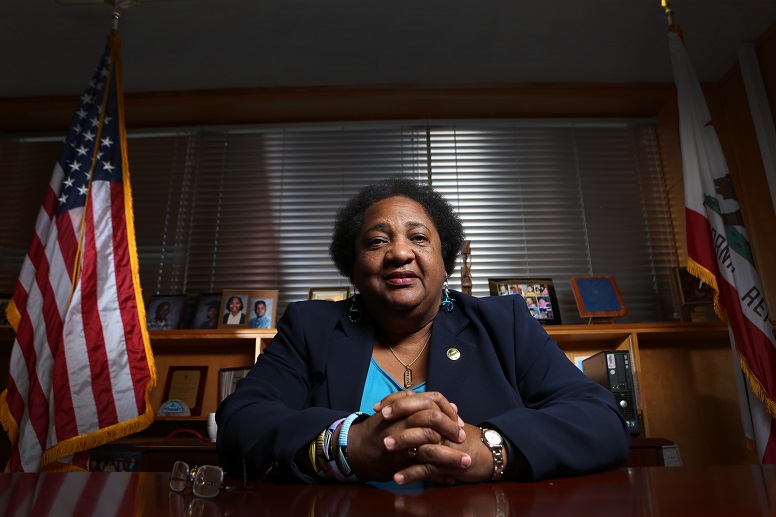
Sacramento Report: What the Hell Are We Doing? Assemblywoman Shirley Weber tries to help teachers improve


After I posted a comment on this page yesterday about the California Teachers Association's opposition to Assemblymember Shirley Weber's admirable efforts to improve teacher performance, I got a nasty, anonymous and untraceable phone call from a woman who sounded completely calm and sober.  She had a nice, ordinary voice, not the drug-addled, ignorant-sounding voice of most abusive phone callers.  I've been wondering who it could have been, and this morning I decided that it was very likely a teacher who was motivated by my comment in Voice of San Diego.

I considered changing my comment. I realized it was too harsh.  I should have done a better job qualifying my statement.

But I am not going to edit my comment in Voice of San Diego.

Instead, I'll qualify it in this response.

First of all, I want to acknowledge that ANYONE WHO RISES TO POWER IN ANY ORGANIZATION ON THIS PLANET is subject to a lot of pressure. I know for a fact that perfectly-decent people who become school administrators or school board members not-infrequently set aside their principles under pressure. They go along to get along, just like officials of CTA--and members of the California Assembly, both Democrats and Republicans.

Also, I think there's a big problem with the Vergara decision.  It puts the cart before the horse.  It gets rid of tenure WITHOUT HAVING A GOOD EVALUATION SYSTEM IN PLACE.  This is a very bad idea.  Vergara would increase the politics in schools instead of increasing the effectiveness of teacher evaluations. 

But isn't this exactly why CTA should agree to a plan like Shirley Weber's?


My conclusion is that CTA wants teacher evaluations to remain political. Why?  Because sometimes the worst teachers are the most loyal supporters of CTA officials and their pals.


Here's the comment I published yesterday in Voice of San Diego regarding the difficulties Democrats have in resisting the power of the California Teachers Association:
A few years ago at the California Teachers Association's yearly conference for the presidents of all the local affiliates, I heard then-executive director Carolyn Doggett tell teachers that they needed to take responsibility for good teaching or the responsibility would be taken from them.  [I was not a union official, just a lowly teacher.]  Clearly, CTA continues to refuse to take responsibility.  I'm afraid that the type of teacher that rises to power in CTA is not the type that's deeply interested in children.

Democrats should be ashamed of kowtowing to CTA instead of supporting principled reformers like Shirley Weber.

Below is an article from Voice of San Diego .--Maura Larkins


...During the Assembly Education Committee’s Wednesday hearing, the San Diego Democrat gave an inspired speech in support of her bill to require that student achievement be used as a factor in job evaluations of teachers and school administrators. Weber’s bill is one of several competing proposals for a comprehensive revision to the state’s teacher evaluation rules.

“Unlike the current way of doing things, AB 1495 would structure our evaluations around student achievement and help teachers improve their classroom outcomes,” Weber said.

Weber, who is considered one of the legislature’s most knowledgeable members on education issues, lined up support from several of the state’s leading education groups, including EdVoice, StudentsFirst and Students Matter. But her bill had one very powerful opponent: the California Teachers Association.

That opposition from the state’s teacher’s union was enough to kill the bill on a 3-2 vote — with fellow Democrats Kevin McCarty and Tony Thurmond opposed and Republicans Rocky Chavez and Young Kim backing Weber. (Other members abstained from voting, which meant the bill didn’t have enough votes in favor to move on.)

The hearing was shocking on several fronts. First, it’s rare for a member of the majority party to have one of their priority bills – on their expert subject matter – fail in committee. Even if members are opposed to the bill, they’ll commonly pass the bill out as a courtesy.

Second, Weber’s not a far-right ideologue that views the California Teachers Association as “the worst union in America.” Rather, she’s been featured frequently in the CTA’s magazine and received the California Federation of Teachers‘ endorsement for her re-election.

Finally, she’s chair of the Assembly Budget Committee, a position that gives her influence over every lawmaker’s pet project or legislative agenda.

The fight over AB 1495 reflects a growing divide among California Democrats over how to respond to Vergara v. California, the pending challenge to the state’s teacher tenure and dismissal process. On one side, those loyal to the state’s teacher’s union have refused to cede any ground, while others, such as Weber, view Vergara as “a wake-up call.”

“If we are not about improving the lives of children,” asked a frustrated Weber, “then what the hell are we doing? … What am I going to do after 40 years of working in a system I am frustrated by? Just go along to get along?”...

Friday, May 01, 2015

Sacramento Report: What the Hell Are We Doing? Assemblywoman Shirley Weber tries to help teachers improve


After I posted a comment on this page yesterday about the California Teachers Association's opposition to Assemblymember Shirley Weber's admirable efforts to improve teacher performance, I got a nasty, anonymous and untraceable phone call from a woman who sounded completely calm and sober.  She had a nice, ordinary voice, not the drug-addled, ignorant-sounding voice of most abusive phone callers.  I've been wondering who it could have been, and this morning I decided that it was very likely a teacher who was motivated by my comment in Voice of San Diego.

I considered changing my comment. I realized it was too harsh.  I should have done a better job qualifying my statement.

But I am not going to edit my comment in Voice of San Diego.

Instead, I'll qualify it in this response.

First of all, I want to acknowledge that ANYONE WHO RISES TO POWER IN ANY ORGANIZATION ON THIS PLANET is subject to a lot of pressure. I know for a fact that perfectly-decent people who become school administrators or school board members not-infrequently set aside their principles under pressure. They go along to get along, just like officials of CTA--and members of the California Assembly, both Democrats and Republicans.

Also, I think there's a big problem with the Vergara decision.  It puts the cart before the horse.  It gets rid of tenure WITHOUT HAVING A GOOD EVALUATION SYSTEM IN PLACE.  This is a very bad idea.  Vergara would increase the politics in schools instead of increasing the effectiveness of teacher evaluations. 

But isn't this exactly why CTA should agree to a plan like Shirley Weber's?


My conclusion is that CTA wants teacher evaluations to remain political. Why?  Because sometimes the worst teachers are the most loyal supporters of CTA officials and their pals.


Here's the comment I published yesterday in Voice of San Diego regarding the difficulties Democrats have in resisting the power of the California Teachers Association:


A few years ago at the California Teachers Association's yearly conference for the presidents of all the local affiliates, I heard then-executive director Carolyn Doggett tell teachers that they needed to take responsibility for good teaching or the responsibility would be taken from them.  [I was not a union official, just a lowly teacher.]  Clearly, CTA continues to refuse to take responsibility.  I'm afraid that the type of teacher that rises to power in CTA is not the type that's deeply interested in children.

Democrats should be ashamed of kowtowing to CTA instead of supporting principled reformers like Shirley Weber.

Below is an article from Voice of San Diego .--Maura Larkins


...During the Assembly Education Committee’s Wednesday hearing, the San Diego Democrat gave an inspired speech in support of her bill to require that student achievement be used as a factor in job evaluations of teachers and school administrators. Weber’s bill is one of several competing proposals for a comprehensive revision to the state’s teacher evaluation rules.

“Unlike the current way of doing things, AB 1495 would structure our evaluations around student achievement and help teachers improve their classroom outcomes,” Weber said.

Weber, who is considered one of the legislature’s most knowledgeable members on education issues, lined up support from several of the state’s leading education groups, including EdVoice, StudentsFirst and Students Matter. But her bill had one very powerful opponent: the California Teachers Association.

That opposition from the state’s teacher’s union was enough to kill the bill on a 3-2 vote — with fellow Democrats Kevin McCarty and Tony Thurmond opposed and Republicans Rocky Chavez and Young Kim backing Weber. (Other members abstained from voting, which meant the bill didn’t have enough votes in favor to move on.)

The hearing was shocking on several fronts. First, it’s rare for a member of the majority party to have one of their priority bills – on their expert subject matter – fail in committee. Even if members are opposed to the bill, they’ll commonly pass the bill out as a courtesy.

Second, Weber’s not a far-right ideologue that views the California Teachers Association as “the worst union in America.” Rather, she’s been featured frequently in the CTA’s magazine and received the California Federation of Teachers‘ endorsement for her re-election.

Finally, she’s chair of the Assembly Budget Committee, a position that gives her influence over every lawmaker’s pet project or legislative agenda.

The fight over AB 1495 reflects a growing divide among California Democrats over how to respond to Vergara v. California, the pending challenge to the state’s teacher tenure and dismissal process. On one side, those loyal to the state’s teacher’s union have refused to cede any ground, while others, such as Weber, view Vergara as “a wake-up call.”

“If we are not about improving the lives of children,” asked a frustrated Weber, “then what the hell are we doing? … What am I going to do after 40 years of working in a system I am frustrated by? Just go along to get along?”...

Wednesday, April 15, 2015

Larry Sand updates us on the ACLU lawsuit against LAUSD regarding seniority

Larry Sand updates us on the ACLU lawsuit regarding the "Last In, First Out" rules for laying off teachers in Los Angeles Unified School District.

The new solution to the problem?  More administrators.  What a mess.  Sorry, kids.

Teacher seniority might well survive the Vergara decision.
Larry Sand
City Journal
July 25, 2014

[Vergara lawsuit:]

Last month’s decision by a Los Angeles Superior Court judge to strike down California’s teacher tenure, seniority, and dismissal statutes may be a great victory for children, though much depends on the outcome of any appeal. This week, Attorney General Kamala Harris filed a 22-page request with Judge Rolf M. Treu asking for further clarification of his decision in Vergara v. California. Harris’s filing, coming on the heels of a similar request from the California Teachers Association, could be the prelude to an appeal. But assuming such appeals fail, the question is what would replace the laws that Vergara voided. A roadmap may already be in place to preserve teacher seniority, based on another pending legal settlement in Los Angeles.

[Sadly, California has snatched defeat from the jaws of victory regarding ACLU lawsuit: Reed v. the State of California:]

In April, the Los Angeles Unified School District and the United Teachers of Los Angeles reached an agreement on a lower-profile case that had worked its way through the courts for four years. In 2010, the American Civil Liberties Union sued L.A. Unified and the local union over mass layoffs stemming from state budget cuts. The ACLU focused in particular on three low-performing schools in South L.A., where more than half of the teachers received pink slips. The lawsuit noted that, district-wide, less than 20 percent of teachers met the same fate. Alleging that seniority-based layoffs had taken a disproportionate toll on poor and minority schools, the ACLU won a settlement protecting students in up to 45 schools from the ruinous effects of the “last in/first out” (LIFO) process.

The union appealed, claiming the settlement would undermine teachers’ rights. In 2012, a state appeals court agreed, sending the lawsuit back to the superior court.

After 20 months of wrangling, the parties agreed to another settlement. As EdSource’s John Fensterwald explained, “The deal in the Reed v. the State of California lawsuit will provide about $25 million annually for three years for additional administrators, mentor teachers and teacher training in 37 middle and high schools where there had been low student performance and high turnover of inexperienced teachers.” But the LIFO problem—the meat and potatoes of the original ACLU lawsuit—remains unaddressed. And the settlement says nothing about how administrators may keep the best teachers when (not if) layoffs become necessary again. The union-enforced LIFO system regularly denies thousands of children a decent education.

Nevertheless, all parties seem to view the Reed settlement as satisfactory. L.A. Unified schools superintendent John Deasy said that it would ensure that kids in the greatest peril benefit the most. “These are invaluable investments . . . which will make a difference in transforming these schools and bring justice to our youth,” he gushed. But Deasy wouldn’t elaborate on how children will prosper from the “investments,” when teachers-of-the-year are laid off and less talented and occasionally inept colleagues are protected—all while the district spends more money on bureaucracy.

Meantime, UTLA attorney Jesus E. Quinonez insisted that “any attempts to extinguish the rights of teachers—here, the right to a neutral and fair hearing process—will not serve the needs of kids or lead to justice in our schools.” That’s outrageous. With LIFO in place, no one gets a hearing of any kind. Administrators ignore variations of teacher effectiveness in making their decisions. LIFO discriminates not only against children, but also against good and great teachers. Yet Dale Larson, an attorney with Morrison & Foerster, which partnered with the ACLU in the lawsuit, asserted: “By providing resources to attract and retain teachers in the 37 low-performing, high-turnover middle and high schools, the settlement renders the legal question raised in Reed academic.” Hardly: the agreement never mentions the words “seniority” or “last in/first out.”

What boosters of the Reed settlement can’t explain is how adding administrators to underperforming schools would help retain good teachers...


Read more: LIFO Lite?

Monday, March 23, 2015

From the archives: California Attorney General disagrees with law firm hired by Grossmont-Cuyamaca College

Maura Larkins' note: A few months ago I depublished about 400 posts, and I'm gradually republishing them. I'm working to censor certain allegations against Stutz Artiano Shinoff & Holtz law firm while continuing to make information available about the actions of public officials.

Why did Grossmont-Cuyamaca Community College fire non-voting student trustee Rick Walker from his job as a web analyst for the college?  The reason they gave was that he had a conflict of interest if he was employed at the same time that he sat on the board. But he didn’t even vote! All he could do was talk?


Who was it who really had a conflict of interest?

Clearly, the board wanted to silence him.

The California Attorney General issued an opinion that there was no conflict of interest.

Leonel Sanchez of the San Diego Union Tribune wrote on Sept. 11, 2007, "A spokesman for the California Community Colleges Chancellor's Office said he was not aware of student trustees at other colleges being told they could not serve on governing boards while working for their districts."

Rick Walker took down his website in or about December of 2007, right after I was sued for defamation by the lawyers for GCCCD.

The "Rethinking"

Nothing much happened when GCCCD trustee Deanna Weeks "rethought" an issue. [Update: Ms. Weeks decided not to run for reelection after several embarrassing episodes when scrutiny of her actions became too uncomfortable.]


October 4, 2007
The "rethinking" allegedly done by GCCCD trustees regarding their firing of non-voting student trustee Rick Walker apparently resulted in no new insights. Certainly, it resulted in no new actions. The board decided to ignore the opinion of the California Attorney General.

Rick Walker succeeded in making GCCC officials at least go through the motions of reevaluating their actions in the light of a California Attorney General legal opinion that contradicts the opinion of Stutz law firm attorney Jack Sleeth.

If GCCCD board members stay true to form, the "reexamination" will result in no action at all.

What they should do, of course, is pay damages to Rick Walker for wrongfully harming him. Especially when they harmed the college by punishing a student trustee for bringing up issues that needed to be addressed for the good of the college.

Leonel Sanchez is doing a great job covering the story for the San Diego Union Tribune.

Here's his September 19, 2007 report:

"The Grossmont-Cuyamaca Community College District will again review the issue of whether a student trustee can serve on the district's governing board while holding a job in the district.

"The last time the district looked at the conflict-of-interest issue, it led to the firing of former Grossmont College student trustee Rick Walker, who was let go from his job as a Web analyst in December 2005.

"Walker, speaking to the board last night, repeated his claim that he was unjustly fired...

"District officials said Walker was fired after district lawyer Jack Sleeth reviewed state education code and concluded that student trustees should not be allowed to be district employees...

"“You will ultimately find out what the law is if somebody will bring some litigation on this,” Sleeth said.

"Walker has threatened to take legal action. State Sen. Christine Kehoe, D-San Diego, requested the legal opinion from the Attorney General's Office at his request.

"Trustee Bill Garrett said he found the attorney general's opinion “persuasive” and proposed changing the district's policy to reflect that opinion. No action was taken on his proposal..."


Leonel Sanchez: (619) 542-4568; leonel.sanchez@uniontrib.com

Friday, October 31, 2014

Shame on California Teachers Association (CTA) for opposing Prop 46; is CTA in the pocket of the Medical Association?

The California Medical Association has been wining and dining Democrats.  California Teachers Association seems very vulnerable to such attentions.  CTA has been campaigning to protect negligent doctors, keeping shamefully low caps on damages for extreme harm to patients.  Prop 46 is a positive step in the right direction for protecting patients in California.  Why is CTA opposing it?  CTA is playing politics and ignoring basic principles of fairness.

We test kids who play basketball.  We test pilots.  Why don't we test doctors?  Think of how many lives would be saved if more doctors were thinking clearly when they see patients, and if doctors had to pay a reasonable amount when they ruin lives.  See below Consumer Watchdog press release and LA Times article.


Doctors That Harm - The Real Stories Insurance Companies Against Prop 46 Don't Want You To Know: Dr. Carl Bergstrom
Lisa Cohen lisa@lisacohen.org

 CARMEL, CA: Dr. Bergstrom was arrested based on a report of sexual assault after a night of drinking.

During the trial, the prosecution produced an audiotape which Dr. Bergstrom had accidentally created when he left his office dictation machine on. Dr. Bergstrom was heard buying cocaine, using cocaine, and trading cocaine for sex on the 5.5 hours-long audiotape. Dr. Bergstrom admitted at trial that he traded prescription drugs for cocaine.

The audiotape also recorded Dr. Bergstrom issuing medical orders, dictating patient chart notes, and providing telephone consultations to patients after using, and while under the influence of, cocaine.
During the trial, two other women testified that they were similarly assaulted by Dr. Bergstrom. Both testified that they believed that they may have been drugged.

Dr. Bergstrom was ultimately sentenced to prison for felony sexual battery. As a result, Dr. Bergstrom's medical license was revoked.

Proposition 46, the Troy and Alana Pack Patient Safety Act, will enact the first law in the nation to require random drug and alcohol tests of physicians in hospitals, modeled after the Federal Aviation Administration testing program that has successfully reduced substance abuse by pilots. Doctors found to be impaired on the job will have their license suspended. If Prop 46 had been in effect, Dr. Bergstrom's drug abuse may have been detected, possibly preventing threats to patient safety in the process.

Hall of Shame: Insurance Companies Backing No on 46

NorCal Mutual Insurance Company    $11,000,000.00
The Doctors Company    $10,500,000.00
Cooperative of American Physicians    $10,161,489.04
Kaiser Foundation Health Plan    $5,000,000.00
Medical Insurance Exchange of California    $5,000,000.00
The Dentists Insurance Company    $1,620,000.00
The Mutual Risk Retention Group    $1,000,000.00

All Insurers:     $44,613,583.22

Total:     $59,169,984.79


Insurance companies have spent nearly $45 million dollars to oppose Prop 46 in order to shield dangerous doctors like Dr. Bergstrom from punishment, at the expense of patient safety, in order to protect their already substantial profits. In total, the opposition to Prop 46 has over $59 million dollars in their warchest, outspending consumer and patient safety advocates more than 8:1.

Learn more about Proposition 46 and the campaign for patient safety at: www.yeson46.org

Your Neighbors for Patient Safety, a Coalition of Consumer Attorneys and Patient Safety Advocates - Consumer Attorneys of California Issues
Initiative Defense Political Action Committees
Kabateck, Brown, Kellner, LLP


A voter guide to California's boring but important ballot propositions
George Skelton Los Angeles Times
Oct. 30, 2014

...Prop. 46 would return the limit on medical malpractice pain-and-suffering payouts to the same dollar value it was in 1975. Inflation has greatly eroded it.

Doctors, hospitals and insurers have raised more than $55 million to kill the measure. They claim it would cause healthcare costs to skyrocket. The nonpartisan Legislative Analyst's Office, however, calculates the increased cost as practically infinitesimal: less than 0.5%.

Back in 1975, then-Gov. Brown and the Legislature set the cap on noneconomic damage awards at $250,000. If that had been adjusted annually for inflation, it would be $1.1 million today. That's where Prop. 46 would reset it.

Opposition ads are demonizing trial lawyers, contending Prop. 46 is all about enriching them. But it's really about securing justice for malpractice victims, who now have difficulty hiring lawyers because the potential awards are so low.

The measure also does two other things. It would require drug and alcohol testing of hospital doctors. And to fight pain pill addiction, it would force doctors to use a state database that tracks patients' prescription histories.

It's long past time to bring the medical malpractice cap into the 21st century. And there's nothing wrong with requiring hospital doctors to undergo drug testing, as pilots and bus drivers do. Controlling pain pill addiction through modern technology also makes sense...

Tuesday, June 10, 2014

Tenure for teachers defeated in Vergara v. California; New mandate for CTA: start protecting good teachers

A California judge has found teacher tenure laws to be unconstitutional.

Let's hope that the California Teachers Association will now stop blocking efforts of reformers to effectively evaluate teachers.  Up until now, CTA has protected ineffective and mediocre teachers, but it looks like CTA is going to have to redirect its energies.

The current system of principal evaluations is a joke, but not a funny one. It is based more on politics than on observation and documentation. It has benefited teachers who are good at school politics even though they might be complete disasters in the classroom.  CTA has supported the current evaluation system because CTA is a master of school politics.

Oddly, we don't often hear demands from good teachers for an effective, objective evaluation system. It seems that good teachers are similar to bad teachers in one respect: they are equally loath to give up the very human institution of school politics. And of course, administrators also like the politics. They're not anxious to have impartial observers come in and evaluate teachers, either.

I am hoping that things will change now, at least for the teachers union. The only reasonable course of action for CTA to pursue now is to start protecting good teachers by helping to design an accurate, unbiased teacher evaluation system (since it looks like CTA will no longer be able to protect bad teachers).

we should institute effective evaluations before we get rid of tenure.  But I suspect that the decision handed down by a Los Angeles judge today (see story below) was probably neede I have said recently thatd
See also: Vergara v. California: the Case That Could Blow Up Teacher Tenure (But who cares? Without a good teacher evaluation system, it won't make much difference.)


to jump start reform.  CTA has made it pretty clear that it was not interested in allowing any real reform of any kind.
Calif. court rules teacher tenure creates unequal conditions
By Lyndsey Layton
Washington Post
June 10, 2014

LOS ANGELES (AP) — A judge struck down tenure and other job protections for California's public school teachers as unconstitutional Tuesday, saying such laws harm students — especially poor and minority ones — by saddling them with bad teachers who are almost impossible to fire.

In a landmark decision that could influence the gathering debate over tenure across the country, Los Angeles County Superior Court Judge Rolf Treu cited the historic case of Brown v. Board of Education in ruling that students have a fundamental right to equal education.

Siding with the nine students who brought the lawsuit, he ruled that California's laws on hiring and firing in schools have resulted in "a significant number of grossly ineffective teachers currently active in California classrooms."

He agreed, too, that a disproportionate number of these teachers are in schools that have mostly minority and low-income students.

The judge stayed the ruling pending appeals. The case involves 6 million students from kindergarten through 12th grade.

The California Attorney General's office said it is considering its legal options, while the California Teachers Association, the state's biggest teachers union with 325,000 members, vowed an appeal.

"Circumventing the legislative process to strip teachers of their professional rights hurts our students and our schools," the union said.

Teachers have long argued that tenure prevents administrators from firing teachers on a whim. They contend also that the system preserves academic freedom and helps attract talented teachers to a profession that doesn't pay well.

Other states have been paying close attention to how the case plays out in the nation's most populous state.

"It's powerful," said Theodore Boutrous Jr., the students' attorney. "It's a landmark decision that can change the face of education in California and nationally."
He added: "This is going to be a huge template for what's wrong with education."

In striking down several laws regarding tenure, seniority and other protections, the judge said the evidence at the trial showed the harm inflicted on students by incompetent teachers.

"The evidence is compelling," he said. "Indeed, it shocks the conscience."

The judge cited an expert's finding that a single year with a grossly ineffective teacher costs a classroom full of students $1.4 million in lifetime earnings.

The lawsuit contended that incompetent teachers are so heavily protected by tenure laws that they are almost impossible to fire. The plaintiffs also charged that schools in poor neighborhoods are used as dumping grounds for the bad teachers.

Los Angeles School Superintendent John Deasy testified that it can take over two years on average — and sometimes as long as 10 — to fire an incompetent tenured teacher. The cost of doing so, he said, can run from $250,000 to $450,000.

In his ruling, the judge, a Republican appointee to the bench, said the procedure under the law for firing teachers is "so complex, time-consuming and expensive as to make an effective, efficient yet fair dismissal of a grossly ineffective teacher illusory."

The judge also took issue with laws that say the last-hired teacher must be the first fired when layoffs occur — even if the new teacher is gifted and the veteran is inept.

The judge declined to tell the Legislature exactly how to change the system, but expressed confidence it will do so in a way that passes constitutional muster and provides "each child in this state with a basically equal opportunity to achieve a quality education."

The case was brought by a group of students who said they were stuck with teachers who let classrooms get out of control, came to school unprepared and in some cases told them they'd never make anything of themselves.

"Being a kid, sometimes it's easy to feel like your voice is not heard. Today, I am glad I did not stay quiet," said one of the students, Julia Macias. "I'm glad that with the support of my parents I was able to stand up for my right to a great education."

The lawsuit was backed by wealthy Silicon Valley entrepreneur David Welch's nonprofit group Students Matter, which assembled a high-profile legal team including Boutrous, who successfully fought to overturn California's gay-marriage ban.

Dennis Van Roekel, president of the National Education Association, the nation's biggest teachers union, bitterly criticized the lawsuit as "yet another attempt by millionaires and corporate special interests to undermine the teaching profession" and privatize public education.

U.S. Education Secretary Arne Duncan hailed the judge's ruling as a chance for schools everywhere to open a conversation on equal opportunity in education.

"The students who brought this lawsuit are, unfortunately, just nine out of millions of young people in America who are disadvantaged by laws, practices and systems that fail to identify and support our best teachers and match them with our neediest students," he said. "Today's court decision is a mandate to fix these problems."

The trial represented the latest battle in a nationwide movement to abolish or toughen the standards for granting teachers permanent employment protection and seniority-based preferences during layoffs.

Dozens of states have moved in recent years to get rid of such protections or raise the standards for obtaining them.

Comments on Voice of San Diego

Allen Hemphill

I have long believed that good teachers hate being part of a system where poor teachers are tolerated.

Maura Larkins

@Allen Hemphill And yet, oddly, we don't often hear demands from good teachers for an effective, objective evaluation system. The current system is based more on politics than on observation and documentation. It seems that good teachers are similar to bad teachers in one respect: they are equally loath to give up the very human institution of school politics. And of course, administrators also like the politics. They're not anxious to have impartial observers come in and evaluate teachers, either. I am hoping that things will change now, at least for the teachers union. Perhaps the Vergara decision will motivate CTA to start protecting good teachers since it looks like CTA will no longer be able to protect bad teachers.

Allen Hemphill

No chance. The union attitude is that bad teachers pay dues also.

Maura Larkins

I think the union may decide to rethink its intransigence on the issue of objective evaluations. The Vergara decision is a big deal.

The union is probably going to have to accept that the worst teachers should not longer play exactly the same role as the best teachers. Ineffective and mediocre teachers should have less responsibility and less pay.

Also, your average principal, who, in most cases used to be a mediocre teacher, should have less responsibility than the most effective teachers for making decisions about instruction. Principals have plenty of other responsibilities. Few of them are equipped to serve as true instructional leaders.

The Vergara decision will do very little good unless the current model of school leadership is changed. In my experience, the best principals were the ones who did the least harm. The bad ones can do enormous harm. I hope Vergara will not simply give more arbitrary power to principals. This situation cries out for objective teacher evaluations.

Thursday, May 08, 2014

Marshall Tuck is a better Democrat than Tom Torklason for this job: Tuck works well with the teachers union, and makes progress at the same time


Marshall Tuck (left) and Tom Torlakson

San Diego City Beat published the following endorsement for State Superintendent of Public Instruction. I disagree with editor David Rolland's conclusions, but he brings up some great discussion points.

Our June 3 primary-election endorsements
San Diego City Beat editorial
David Rolland, editor
May 07, 2014

...Marshall Tuck says he has the fix for California's ailing education system, and he has many people convinced.

Recently, former Los Angeles Mayor Antonio Villaraigosa endorsed him, touting the 40-year-old entrepreneur as a reformer. The two worked together on the Partnership for Los Angeles Schools, a nonprofit credited with improving education in low-income neighborhoods.

Tuck is also the past president of Green Dot Public Schools, one of the nation's most prominent charter-school networks.

Tuck hopes to unseat incumbent Tom Torlakson, a Democrat who has the support of the powerful California Teachers Association and the Democratic Party.

Increasingly, liberals support an education-reform agenda, but during his time in office, Torlakson has been lackluster, unwilling to stand up to union intransigence. Citizens now have to choose between a status-quo candidate and someone who could push for troubling changes.

[Maura Larkins' response: It's interesting that City Beat identifies Torlakson as a Democrat, but fails to let readers know that Tuck is also a Democrat. But at least City Beat editor David Rolland admits that Torlakson has failed to stand up to union intransigence or to change the status quo. Too many Democrats like to roll over and play dead as soon as the California Teachers Association steps into the arena. Democrats should care about kids as well as teachers. Teachers should be considered, but they shouldn't continue to have the final say on what goes on in our failing schools, especially since they refuse to agree to any plan for objective, effective teacher evaluations.]

Part of improving education, Tuck argues, is weakening labor protections for educators, such as seniority-based layoffs, making teachers wait longer than two years to get tenure and tying teacher evaluations to student test scores. Not everything Tuck proposes is bad, but as a former Wall Street investment banker with funding from groups that would love to see the privatization of public schools, it's unclear how far he would go to dismantle the current system.

While the superintendent's office interprets the education code, it has less power in terms of setting policy. So some feel Tuck could bring fresh perspective without being able to do too much damage.

However, Tuck is too dangerous of a choice for us. We reluctantly endorse Tom Torlakson for superintendent.

[Maura Larkins' response: Dangerous? Changing the status quo is dangerous? That makes no sense since the current system is consigning millions of students to a lifetime of failure (that's not dangerous?) and Tuck has admitted that the Superintendent doesn't even set policy.

Many people prefer the current system because it allows for arbitrary, political decision-making.

The teachers union does not want to address the problem of rampant mediocrity among teachers--or the smaller problem of the 10% of teachers who are ineffective.

CTA wants teacher evaluations and other decisions to continue to be determined by school politics rather than objective data provided by outside observers or standardized tests.

I don't believe students tests should be used to fire teachers, but I do believe the tests should be used to determine whether a teacher should either:
1) become a master teacher; or
2) be given a part-time master teacher to guide the weaker teacher and give supplemental lessons to students.

Many moguls (like Irwin Jacobs) and their administrator pals also want to avoid objective measurements and simply turn over all the power of teacher evaluations to principals. I notice these folks haven't come up with a way to evaluate principals, which is a problem since many principals are simply failed teachers.

Mr. Rolland seems as intransigent as the teachers union.

Sadly, Mr. Rolland is typical of San Diego liberals who march in lock step with the California Teacher Association leadership. Los Angeles liberals are more independent of CTA.

City Beat uses hysterical phrases like "dismantle the current system", then admits in his next breath that the state superintendent can't change policy. He clearly believes that the teachers union deserves protection more than kids do. I can see why he'd want to avoid an extreme anti-union candidate, but Tuck is a Democrat who has worked well with the California Teachers Association. Teachers at Green Dot schools created a model for teacher evaluations that will be used by the state:]


New Teachers' Union Contract Now In Effect at Green Dot Schools

07/12/2012

Teacher-Designed Evaluation Process and Professional Support to Serve as State Model

Los Angeles - Green Dot Public Schools announced a new contract agreement with their local teacher union, Asociación de Maestros Unidos (AMU), that provides a salary schedule step increase, a catch-up provision, and an innovative bonus program tied to teacher effectiveness. The contract, designed by teachers and ratified by vote of union members in May, officially went into effect July 1.

“In a time when the state has suffered severe cutbacks in education, we’re pleased our teachers will be better paid, better protected and better supported,” said Marco Petruzzi, Green Dot Public Schools’ President and CEO. “That is really a win for our students because it furthers our goal of having excellent instruction in every classroom.”

Under the new agreement, teachers will go through a more fair and comprehensive evaluation and development process, which will include multiple observations, ongoing feedback, and opportunities for professional growth. Test scores will be just one among multiple measures used for evaluation. Other key attributes of the agreement include a two-year pilot program for bonuses based on teacher effectiveness, and three additional professional development days for new teachers.

“We believe we’re on the right path to creating a more meaningful way of assessing teacher effectiveness,” added Dr. Cristina de Jesus, Green Dot’s Chief Academic Officer, speaking about the evaluation and development tools included the new contract. “Our goal is to become the leader in supporting teachers in their professional growth.”...

I disagree with Marshal Tuck about Vergara v. California. I think getting rid of tenure and seniority would be a disaster without instituting effective teacher evaluations. But something has to be done to release the death grip of CTA that prevents any meaningful reform at all. I also think something needs to be done to release the death grip of administrators.

What exactly will it take for California Teachers Association to agree to reforms, including effective teachers evaluations?

I don't like the Parent Trigger law, since parents don't seem to be able to improve schools when they take them over, but at least it gets the attention of officials in failing schools.

A Great Divide: The Election Fight for California’s Schools By Gary Cohn California Expose March 12, 2014 ...“There’s no question that the teachers union has a lot of influence on the state, but I think they get too much negative credit for all the problems,” Tuck tells Capital & Main during a lengthy interview at his bare-bones campaign office on Venice Boulevard in Los Angeles. Then, almost in mid-sentence, he appears to change his mind about teachers unions. “Right now,” he continues, “their seat at the table is too big and they have too much influence over education policy.”

Tuck has spent almost no time as a classroom instructor, while the 64-year-old Torlakson is a veteran science teacher and track coach. Torlakson, who is still a teacher on leave from Contra Costa County’s Mount Diablo Unified School District, says he usually teaches one community college course every year. He was elected as California’s 27th State Superintendent of Public Instruction in 2010 after serving in the state legislature. The two men also face longshot candidate Lydia Gutierrez, who lost a bid for superintendent in the 2010 primary. If no candidate receives more than 50 percent of the June primary vote, a runoff election between the two frontrunners will take place in November.

Torlakson has received substantial financial support from unions and celebrates his closeness with teachers. “I’m happy to be aligned with teachers – classroom teachers know me and trust me,” he says in a telephone interview.

A significant indication of what a future Tuck administration’s relations with teachers might look like can be found in his embrace of a lawsuit that seeks to erase nearly a century of teacher job protections, including seniority rights. The lawsuit, Vergara v. California, is currently being tried in Los Angeles Superior Court and names Torlakson as a defendant.

“I’m supportive of the case,” Tuck says. “I think that the changes they’re asking for are good for kids and make sense for California schools.” He points out that he recently wrote a commentary for LA School Report backing the case. Tuck also believes in the contentious Parent Trigger law, which has opened the door for charter schools to take over public schools and is strongly supported by conservatives and school privatizers. Torlakson voted against the law in 2009 when he was a member of the state Assembly.

Surprisingly, even those who follow the politics of education have paid little attention to the Tuck-Torlakson battle, which has received scant media coverage so far. John Rogers, director of the University of California, Los Angeles’ Institute for Democracy, Education and Access, suggests that influence over education policy has shifted somewhat from the superintendent to the California State Board of Education. The board’s current president is Michael Kirst, who was appointed by Governor Jerry Brown. Kirst had served on the state board of education under Brown in his first term as governor in 1975...


Here's a bizarre endorsement from San Diego's La Prensa:

State Superintendent of Public Instruction

This year the State Superintendent of Public Instruction is a very competitive race between the incumbent Torlakson and Marshall Tuck...

The last thing the schools need today are more changes...

We believe that now is not the time for change, but a time for a steady hand on the wheel to help guide education and Torlakson is that person.

[Maura Larkins' comment: I wouldn't call it "guiding" if the guide is guaranteed not to change course. You don't even need a human being at the wheel if you don't want any changes. You just jury rig the steering wheel so it can't move.]

Saturday, May 03, 2014

SDUSD trustee Richard Barrera does a turnaround: he no longer wants to hold teachers accountable


SDUSD trustee Richard Barrera

Updated--see bottom of post

San Diego's liberals seem to be far more obedient to the California Teachers Association than Los Angeles liberals, and students suffer for it. Here's a bit of the history of that subject. Shame on Richard Barrera for abandoning his principles, apparently in exchange for campaign contributions and a cushy job.

THE PROBLEM ISN'T TENURE--IT'S THE LACK OF EFFECTIVE TEACHER EVALUATIONS

I don't object to tenure. I object to the intransigence of the teachers union in the face of calls for education reform.

Getting rid of tenure will do no good at all, and would likely do harm, if teacher evaluations continue to be as worthless as they are now.

WE SHOULD LOOK AT THE PERFORMANCE OF PRINCIPALS BEFORE WE PUT THE ENTIRE SYSTEM IN THEIR HANDS

If we get rid of tenure we'll just have to worry more about the already-existing problem of principals protecting their own careers by making alliances with mediocre but popular and politically-strong teachers. I get the feeling that David Welch, mogul of Student Matters, honestly doesn't know that many principals are former teachers who switched to the front office when they realized that they don't have what it takes to make it in the classroom.

I get the feeling that Voice of San Diego's education reporter Mario Koran doesn't know this, either.

HAS VOICE OF SAN DIEGO SABOTAGED THE DEBATE ON TENURE AND TEACHER EVALUATIONS?


Emily Alpert Reyes

Voice of San Diego muzzled and then fired its education reporter, Emily Alpert (now Reyes), who knew what was going on in schools. The reason for this seems to be related to the politics and big bucks of VOSD's big donor trio Buzz Woolley, Irwin Jacobs and Rod Dammeyer who are deeply involved in charter schools and anti-union politics.


Voice of San Diego founder Buzz Woolley

Just before she was fired, Emily Alpert was one of the few people in San Diego doing serious research on teacher layoffs based on seniority. She dared to bring up the topic of teacher evaluations. If VOSD donor trio Buzz Woolley, Irwin Jacobs and Rod Dammeyer were really interested in improving education for all children they would have fallen all over themselves to keep Emily in San Diego. (Emily now works for the Los Angeles Times, but she's not writing about education.)


Irwin Jacobs, Voice of San Diego's major donor

My belief is that Buzz Woolley, Irwin Jacobs and Rod Dammeyer want to improve education for just enough students so that they can run their businesses with American employees--and they want those students in charter schools. They think they can have a flourishing society while the middle and working classes sink lower and lower.


Rod Dammeyer, charter schools advocate and political donor

Note: Buzz, Irwin and Rod also tried to remake the San Diego Unified School Board with appointed members who would undermine the elected members. They seems to think we'd do better without democracy.

IS THE CALIFORNIA TEACHERS ASSOCIATION TRYING TO SELF-DESTRUCT?

You might think that the teachers union could manage to do a better job of acting in the interest of all citizens than Buzz, Irwin and Rod have done.

Sadly, this does not seem to be the case.

I believe that schools can be fixed without getting rid of tenure (I have described one such plan HERE), but schools can't be fixed as long as the California Teachers Association stands in the way.

Something clearly needs to be done, but Richard Barrera doesn't seem to want to address the problem of rampant mediocrity among teachers. It's actually a bigger problem than the incompetence of about 10% teachers. I wouldn't use evaluations to fire teachers; evaluations are needed to help teachers become highly competent.

Sadly, Barrera will likely continue to toe the line for the people who control the California Teachers Association, so reform is looking unlikely. CTA doesn't want teachers to be held accountable; it wants to continue the politically-convenient system of principal evaluations.

The current system is such a joke that principals rarely even bother to observe teachers.

See all posts re teacher evaluations.

Teachers need to have a union. But why can't it be better than this one? Couldn't it be one without people like Tim O'Neill? (See comment at the end of this post.)


VOICE OF SAN DIEGO STORY ON RICHARD BARRERA'S TESTIMONY AT VERGARA TRIAL

Teachers Call Upon San Diego School Trustee to Help Save Seniority Rules
By: Mario Koran
Voice of San Diego
May 2, 2014

In 2010, when San Diego Unified was in the throes of a budget crisis and staring down a round of layoffs, school board trustee Richard Barrera told U-T San Diego, “Pink-slipping disproportionately affects poorer schools – absolutely.”

Now, that argument is the basis of Vergara v. California, a case that could blow up deeply rooted protections for California teachers. Barrera, who is now the leader of the San Diego Imperial Counties Labor Council, which includes the teachers union, changed his tune when he testified in the case.

Teachers see the policies that force the youngest teachers to bear the brunt of layoffs as the fairest possible, he argued. Replacing it with a system that requires administrators to make value judgments would erode trust as teachers vied for their spots, he said.

Along with attorneys from the state and the California Teachers Association, Barrera pointed to San Diego Unified as proof that a district can succeed because of the current policies – not in spite of it.

The case is the product of Students Matter, a group founded by Silicon Valley business mogul David F. Welch, a group of California students and a heavyweight cast of attorneys. They initiated the suit and claim the teacher protections violate students’ constitutional rights to equal access to quality education.

California law makes it nearly impossible to dismiss a bad teacher once he or she has received tenure, they argue, and last-hired-first-fired layoff policies disproportionately impact schools in high-poverty areas because they’re more likely to have less experienced teachers. Layoffs at these schools, then, create more turnover and worsen the experience for students.

But Barrera said that because San Diego Unified has had a good relationship with its teachers union, it’s been able to avoid mass layoffs in the first place.

In the grip of the budget crises, about 1,100 teachers were issued pink-slips in 2011, and all but 200 of those were rescinded, he said. And when 1,500 teachers were laid off in 2012, everyone was invited back.

Josh Lipshutz, an attorney for the plaintiffs, told VOSD he found this part of Barrera’s testimony bizarre. “Look, nobody wants layoffs. But layoffs are reality,” Lipshutz said.v “We’re not arguing that teachers should be laid off. But in speaking with administrators we heard over and over that everybody knows who the worst teachers are. All we’re saying is that in a layoff environment, why would you not want to include those teachers?” he said.

And avoiding layoffs in dark budget times also comes at a very real cost.

At this week’s school board meeting, trustee and fiscal wonk Scott Barnett castigated the rest of the school board for promising teachers pay raises that it couldn’t afford and selling off real estate to make up the difference.

Even though the district got money from Prop. 30, a voter-approved statewide measure meant to stave off drastic cuts to schools, San Diego Unified is facing a $100 million budget shortfall.

“Guess what? The proposed hole is bigger next year than this year because of this board’s inability to have any semblance of control,” Barnett said.

Holding Up San Diego as a Model

Barrera said that the idea that layoffs disproportionately impact poor schools doesn’t capture reality.

He said Central Elementary in City Heights, the school that Superintendent Cindy Marten once ran, is a good example of how a school can create a culture where teachers want to stick around.

Barrera said a school like Central is possible because teachers share strategies for what works in the classroom. In other words, if a district were to try to measure which teachers were better, teachers might be afraid to share what works with a competitive colleague.

“If we replace the seniority system – one which most people tend to see as fair – with one that teachers see as unfair or arbitrary, we’re going to dramatically hurt trust between teachers and their principals,” he said.

Still, schools like Jackson Elementary in City Heights, now Fay Elementary, might say the problem is a little bit more serious. During the budget crises, high-poverty schools like Fay – which had less experienced teachers – were hit hardest by last-in-first-out layoff policies.

In 2008, 24 out of its 26 teachers received layoff notices. Most of those ended up being rescinded, but in 2011, when 25 out of 27 teachers got pink slips – it was deja vu all over again.

“The reality is,” Lipshutz said, “that once the pink slips go out, the damage is already done.”

Teachers will often look for positions in more stable districts, and “it’s very discouraging to be treated as a number, to be told that you don’t have value beside your hire-date,” he said.

Barrera doesn’t disagree. “That’s all the more reason that we need to do what we can to avoid pink slips and layoffs,” he said. “Pink slips are disruptive, yes, but what’s more disruptive is laying off teachers and having huge class sizes.”

So What’s a Good Teacher?

Barrera said the major hole with the Vergara plaintiffs’ case is that they never clarified what, exactly, makes a teacher ineffective. In fact, the defense led with that point in its closing brief.

Of course, rebooting the criteria to measure teacher performance depends on whether the plaintiffs can persuade the judge that measures like test scores can be considered.

Plaintiffs leaned on Harvard researcher Thomas J. Kane, who said black and Latino students in Los Angeles Unified were more likely than their white and Asian peers to be taught by the worst teachers.

Kane reached his conclusion by looking at teacher effectiveness through a value-added formula, which measures improvements in student test scores over time.

To be sure, value-added formulas aren’t universally accepted. Critics like education historian Diane Ravitch have railed against them for years. Another said they resulted in “mathematical intimidation” from school administrators.

One problem, Barrera said, is that the scores appear objective, but fail to account for poverty, or other factors that influence learning. He said he isn’t opposed to all changes to the evaluation system, but they should begin a conversation about the real goal: quality teaching.

“From a policy level, you think we’d start with questions about what’s working and how we could do more of that, instead of trying to force these blunt instruments in through the court system,” Barrera said.

Lipshutz said poverty was a theme woven throughout the trial.

“To us, that’s a red-herring. We don’t dispute that poverty is a factor in student learning,” he said. “The question to us is whether the laws that are in place are harming students and preventing them from getting the best education they possibly could. And we showed very clearly that the answer is yes.”

COMMENTS

Here's a comment I found intriguing (for personal reasons):


Tim O'Neill, former executive director for CTA affiliates in Chula Vista

Tim ONeill (cvtimo)

The Vergara lawsuit claims that seniority based layoffs negatively discriminate against children of color. A valid critical commentary or report would show how this claim holds water in ANY school district in San Diego County over the past several years when schools have been hit by budget cuts of 25% or more.

The fact of the matter is that there have been none. All the union-haters should consider this in their world view and perhaps question the motives of the plaintiffs in this case.


Maura Larkins comment:

Tim,
Are you calling Richard Barrera a "union-hater" for saying, "“Pink-slipping disproportionately affects poorer schools – absolutely”?

I don't think the charge would fit, since he is the CEO of the San Diego Imperial Counties Labor Council.

Also, the ACLU sued the Los Angeles Unified School District based on the devastating impact of teacher layoffs on poorer schools. Are you calling the Los Angeles ACLU "union-haters"?

Maybe you should stop with the name-calling and try to come up with a solution to the problem.

[Maura Larkins note: I suspect this "Tim O'Neill" may be the same Tim O'Neill who worked for the California Teachers Association until 2010, and who violated the Chula Vista Educators bylaws by refusing to allow me to make an ethics complaint to the CVE Representative Council.

See a copy HERE of his letter to me in which he states that Gina Boyd herself denied my request to appear before the Rep Council to make an ethics complaint about Gina Boyd!

The Tim O'Neill who was the executive director of Chula Vista Educators worked hard to make sure that politics ruled in the district. That Tim O'Neill aided and abetted multiple violations of labor law and the teachers contract to ensure the re-election of CVE President Gina Boyd. But he himself lost his job and was apparently sent to work anonymously (until now, it appears) in the CTA offices in Mission Valley.]


COMMENT FROM JIM JONES:

Tim,
Either seniority protects the best teachers, and also keeps them out of the worst cesspool schools, which are minority schools, or seniority doesn't matter, it can't go both ways.
It's time for teachers to step up and put kids first, stop using them as pawns to feed public union greed.


Tim O'Neill, former executive director for CTA affiliates in Chula Vista

COMMENT FROM TIM O'NEILL:


"Using them to feed public union greed", huh? Please be a bit more specific in your retoric (sic).

Teaching assignments (school, grade level, subject assignments) are regulated in each school district collective bargaining agreement negotiated with the local teacher union in that district, not regulated by state law, which this lawsuit addresses.

The vast majority of these negotiated agreements places seniority as a subordinate criterion to many other factors such as subject matter credential, and most notably the opinion of the school principal. In other words, seniority, in most cases is NOT the determining factor with regard to a teacher's assignment.

It is true that some teaching assignments are more difficult than others. It may also be that vacancies occur more regularly at schools with such assignments, but for a variety of reasons. Some of the "best" teachers work at these schools; sometimes they don't. Are you suggesting that the "best" teachers be limited in their options as to where they would choose to work?


Maura Larkins response:

No, Tim, Mr. Jones is not suggesting that tenured teachers be limited as to where they work. He is simply suggesting that tenured teachers tend to use their seniority to get out of--and stay out of--schools in low income areas. In fact, I must say that I did notice during my years in Chula Vista Elementary School District that teachers with high seniority tended to snap up the job openings at schools in high-income areas.

I think that the success of children should not be subordinated to any goal at all that the teachers union might have.

It doesn't matter what the reason is that CTA has refused to allow any real progress in evaluating teachers--whatever it is, it's not a good enough reason. The fact is that the current system of principal evaluations is a joke, and it's part of the reason so many kids are failing to get decent educations.


Principal Charlie Padilla retired
in the middle of the school year

I had a principal who came in fresh to the school, not knowing that I had been given all the lowest-achieving students in my grade level because I was also given the English-learners and it seemed to make sense. I was perfectly happy with the situation.

The new principal must have looked at the students' tests before sending them in to be scored, because he wrote on my evaluation that I had low student test scores--before the results came back! My students were progressing at top speed, particularly in their critical thinking, but they were starting the year from far behind the kids in the other classes at my grade level.

In fact, when the scores came back, they showed that my students had made one, two, three or even four years progress when they were with me.

That principal was highly regarded because he was highly political. But, strangely, he eventually retired from the district in the middle of the school year. He got another job, so obviously he wasn't interesting in actually retiring. It sometimes takes a while to figure out how bad some principals are. This would be less of a problem if principals weren't in charge of evaluations.

I once heard former CTA Executive Director Carolyn Doggett pointing out to CTA affiliate presidents that if they didn't improve education, they would become irrelevant. CTA would be wise to come up with an evaluation plan pronto. What's your plan for teacher evaluations, Tim?

COMMENT FROM francesca

@Maura Larkins If you taught in the Chula Vista School District, then you are probably more realistic about the idea of using test scores to evaluate teachers. When children have not mastered English, their test scores don't really reflect what they have learned or know.

Maura, Do you have an objective way to measure whether teachers are doing an effective job?


Maura Larkins COMMENT:

Thanks for asking, Francesca! I think observations are the single most important source of effective evaluations, and they should be done frequently by people from outside the school district (to avoid school politics).

Dennis Schamp and Scripps Dad and I had a somewhat detailed discussion recently on what should be observed; you can see our discussion at the bottom of this April 28 VOSD story:

The Case That Could Blow Up Teacher Tenure

The two main things we discussed as needing to be observed are:
1) What is the teacher doing?
2) What are the students doing?

Non-professionals could be used to make superficial observations. It would be up to professionals to evaluate the data and follow up with their own observations.

Scripps Dad says he's been involved in a good teacher evaluation program.

Also, student test scores would only be helpful after a number of years of gathering data about a teacher's performance, and even then, research shows that these scores are reliable indicators only for the top 10% and bottom 10% of teachers. The other 80% of teachers tend to get extremely variable results.

I do not think evaluations should be used to determine employment.

Instead, I think they should be used to identify the most highly effective teachers and to help average and below-average teachers.

I believe that the most highly effective teachers should then be given responsibility as master teachers to direct the less effective teachers and to give supplemental lessons to students, and to give training to their fellow teachers. This would be cheaper and more effective than bringing in ridiculously expensive outside vendors to do training.

I would expect master teachers to be paid like doctors and lawyers.


Donald Kimball

One source of teacher evaluations could be 4th grade teachers evaluating the 3rd grade teachers. The teachers in the next grade up get to experience the students from the lower grade, and can identify the better and worse teachers. Graduating seniors in high school could also evaluate their 10th, 11th, and 12th grade teachers. By that time, the graduating seniors have a good sense of the good teachers and poor teachers. Parent classroom volunteers can also provide teacher evaluations. In fact, Facebook groups organized around their specific schools have detailed recollections of the very best and very worst teachers.


Paul M Bowers

Indeed, the next-level teacher can be very helpful when determining if the previous teacher properly prepared his/her students.

I'm not a big fan of using social media for evaluating anyone. People get into a very nasty mob mentality and people are far more likely to post negative things than positive. And do so in a public place- things get adversarial quickly and the employee has no defense.


Maura Larkins

The goal is to get an objective evaluation. How could you keep personal feelings, good or bad, out of this? People would be inclined to give good evaluations to those who support their agendas, and punish those who disagree with them. They'd be likely to give good evaluations to ineffective teachers who are their friends, and bad evaluations to good teachers who don't fit in to their social hierarchy. Humans are very social creatures. Politics needs to be left out of something this important.


Paul M Bowers

...I'd like to see employees retained, promoted or dismissed on the quality of their work...

Maura Larkins

Paul Bowers, I like your idea of promoting teachers based on the quality of their work, but I bet you wouldn't like my idea about what position they should be promoted to.

I'd like to see the most effective teachers stay in the classroom--but have responsibility for several classrooms.

Each of those classrooms would also have a regular teacher who might be a young person on the way up, or an older person with many positive skills who doesn't quite fit the master teacher category.

There would be separate salary scales for master and regular teachers. The former would be paid like doctors and lawyers, while the latter would have their salaries capped at a somewhat lower level than the current system provides. The money saved on three or four regular teacher salaries would pay for the master teacher.

Also, the master teachers would provide professional development, saving schools the obscene amounts of money currently paid to vendors peddling the latest fad.

I think a lot of political and personal misery could be avoided by simply reducing the responsibilities of ineffective teachers and giving them a master teacher rather than dismissing them. Some ineffective teachers are very sweet and kind to kids. And others are very connected to the teachers union. Either way, trying to get rid of them would likely be disastrous
.


UPDATE MAY 5, 2014:

DO UNION LEADERS WANT TO KEEP THE EVALUATION PROCESS POLITICAL SO THEY CAN CONTROL TEACHERS BETTER?


You might be wondering why Tim O'Neill would lead Chula Vista Educators into aiding and abetting a string of illegal actions. Was it merely to protect CVE president Gina Boyd from the ire of the "Castle Park Family" as she was facing a union election? Perhaps not.

I just discovered a startling connection while perusing Facebook. The principal I mentioned above was Charlie Padilla. Here's a post about his middle-of-the-year retirement from CVESD. He turns out to be a personal friend of Tim O'Neill!


COINCIDENCE?
Charlie Padilla on the left, Tim O'Neill on the right.
Does this photo from Charlie Padilla's public Facebook
page of three couples out together for dinner on April 27,
2014 help explain why Tim O'Neill might be motivated to aid
and abet a string of illegal actions and violations of contract?


Tim O'Neill wouldn't allow the CVE board of directors to hear my complaint about him and Gina Boyd. CTA is a very top-down organization, run by administrators like Tim O'Neill--and CTA lawyers--rather than elected union officials.


Wayne Johnson

I have spoken out for years on the behind-the-scenes collusion between the teachers union and school administrators. They often spar in public, but Wayne Johnson (President of CTA from 1999-2003) instituted a policy in which CTA affiliates would play nicer with school districts in order to reach more deals behind closed doors. (Of course, Wayne was acting on the direction of the real policy-makers at CTA, the lawyers. The elected officials are just figureheads.)